Hunnewell Estates Historic District

Why it's listed
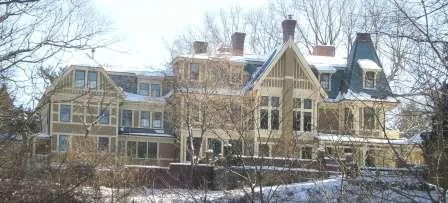
Hunnewell Estates is a family compound of houses, gardens and farm buildings in the southwest part of Wellesley, Massachusetts, spread across 387 acres between the Charles River and Lake Waban. The core is made up of 18th-century houses bought by the Welles family, which Horatio Hollis Hunnewell expanded after he built his own house, "Wellesley," in 1851. He added lodges, a conservatory, an Italian garden with tiered topiary, and a nine-acre pinetum. From the 1870s he built houses for his children, using architects such as John H. Sturgis and Henry Van Brunt for early Queen Anne designs, and later his son's firm, Shaw and Hunnewell, for Queen Anne and Georgian Revival work. A few changes followed in the 1930s. The district counts 29 contributing buildings, 22 structures and 3 sites. It is significant for its architecture and for the social history of wealthy Bostonians' summer estates, and the estate's prominence is tied to the town's naming in 1881.
Machine-generated summary. This summary was generated by a language model from the official nomination document and has not been reviewed line by line by an editor. It may contain errors. Check the source document before relying on any detail. Source: nomination document (PDF) · catalog entry. Generated October 2026 (model claude-sonnet-5-5, prompt v1.0-2026-10-29).
| Period of significance | 1763-1938 |
|---|---|
| Styles | Colonial - Postmedieval English (New England Colonial); Late Victorian - Renaissance, Gothic, Queen Anne; Late 19th & 20th c. Revivals - Colonial Revival |
| Areas of significance | Architecture, Social History |
| Acreage | 387 |
| Boundary source | NPS cultural-resource GIS polygon |
| Full listing page | Hunnewell Estates Historic District (property record) |
What listing means for this property
This is a historic district. Buildings within its boundary are either contributing (they add to the district's significance) or non-contributing. Owners of contributing income-producing buildings can claim the 20% federal rehabilitation tax credit; homeowners should look at state credits. National Register districts impose no design review by themselves; a local historic district ordinance, if one exists, does (the difference explained).
General information, not legal or tax advice. Rules change; confirm with your State Historic Preservation Office or a qualified adviser.