Hubbardston Town Common Historic District

The National Park Service has not published a boundary polygon for this district; the map shows the listed properties inside it and the district's reference point.
Why it's listed
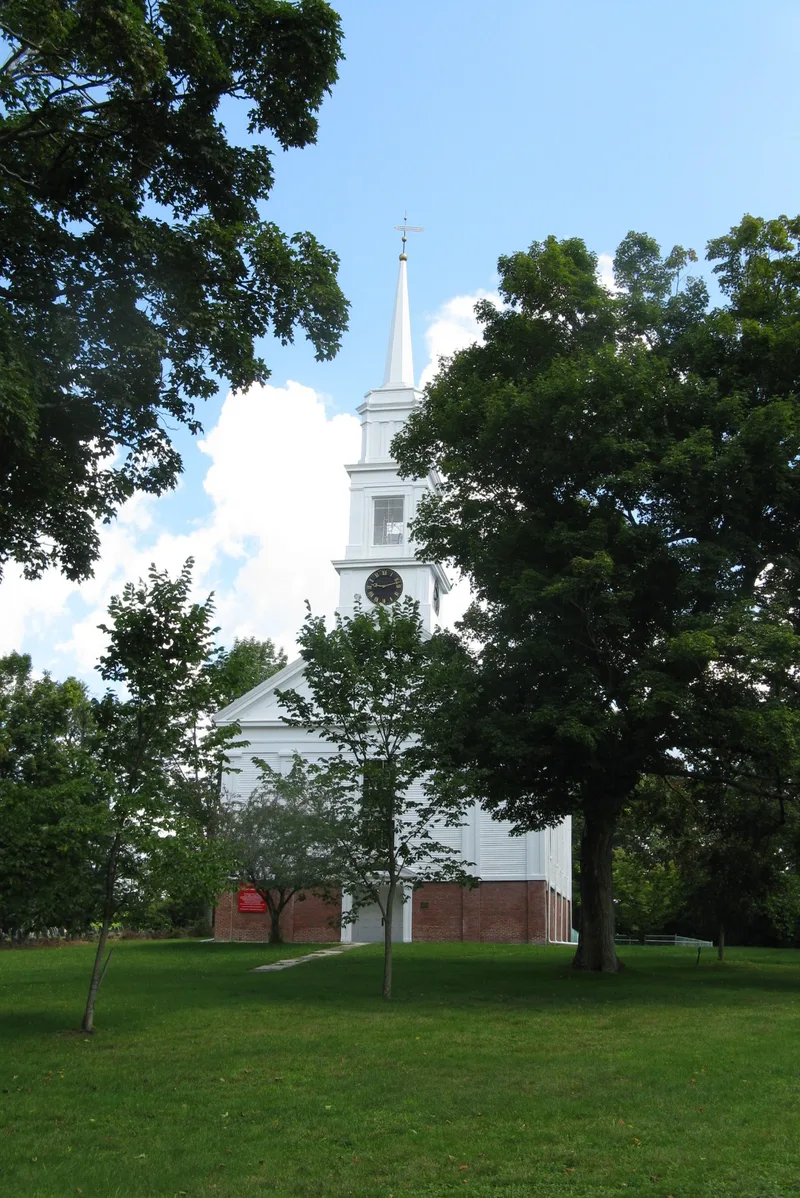
Hubbardston's town common is a 1.19-acre L-shaped remnant of land set out in 1773 for the community's first meetinghouse. It still holds the original church, the town's oldest burial ground, and a long grassed space dotted with monuments. The First Parish Church sits on a small rise at the head of the common. It may contain parts of the 1773 frame, but its present look comes from an 1842 Greek Revival rebuilding and an 1868-69 update that added a brick basement story. A four-stage steeple, rebuilt after the 1938 hurricane, crowns the clapboarded building. Along the west edge of the common stand the 1885 Soldier's Monument, a pair of bronze cannon placed in 1905, later granite war memorials, and a wooden guideboard seen in photographs from the 1890s. The common also reflects the town's religious history, including the 1827 division of the congregation. The church vestry now houses a day-care center.
Machine-generated summary. This summary was generated by a language model from the official nomination document and has not been reviewed line by line by an editor. It may contain errors. Check the source document before relying on any detail. Source: nomination document (PDF) · catalog entry. Generated October 2026 (model claude-sonnet-5-5, prompt v1.0-2026-10-29).
| Styles | Mid-19th Century: Greek Revival |
|---|---|
| Areas of significance | Architecture, Religion, Social History, Politics/Government, Community Planning and Development |
| Acreage | 1.2 |
| Boundary source | not published |
| Full listing page | Hubbardston Town Common Historic District (property record) |
What listing means for this property
This is a historic district. Buildings within its boundary are either contributing (they add to the district's significance) or non-contributing. Owners of contributing income-producing buildings can claim the 20% federal rehabilitation tax credit; homeowners should look at state credits. National Register districts impose no design review by themselves; a local historic district ordinance, if one exists, does (the difference explained).
General information, not legal or tax advice. Rules change; confirm with your State Historic Preservation Office or a qualified adviser.