House of Seven Gables Historic District

Why it's listed
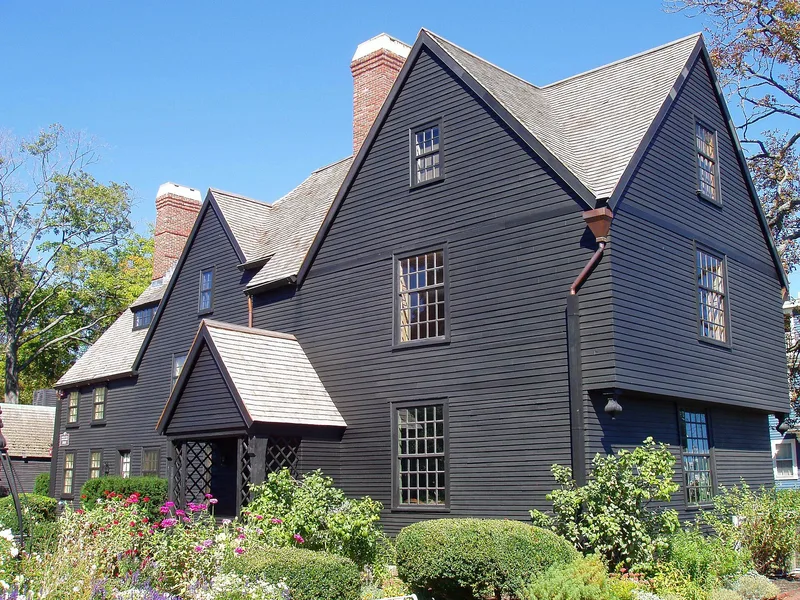
Eight buildings on Salem's waterfront make up this district, which is centered on the House of Seven Gables. John Turner built the house in 1668, and it was enlarged over the following decades, most notably with a south wing around 1678 and Georgian interior remodeling about 1720. It is described as the most ambitious frame dwelling of the 17th century still standing in Massachusetts, and it is believed to have been the setting for Nathaniel Hawthorne's novel of the same name. Nearby are the Retire Beckett House, the Hathaway House, the Hawthorne Birthplace, the Counting House, the Doret House, the Federal style Phippen House and Emmerton Hall, dating from about 1655 to 1840. Several were moved to the site. The settlement association founded by Caroline Emmerton restored the group and maintains it for public education. The grounds are planted with species suited to the 18th and 19th centuries.
Machine-generated summary. This summary was generated by a language model from the official nomination document and has not been reviewed line by line by an editor. It may contain errors. Check the source document before relying on any detail. Source: nomination document (PDF) · catalog entry. Generated October 2026 (model claude-sonnet-5-5, prompt v1.0-2026-10-29).
| Period of significance | 17th, 18th and 19th centuries (specific dates 1655, 1682, 1740, 1780, 1782, 1840) |
|---|---|
| Styles | Colonial and Georgian-era frame houses with Federal style buildings (Phippen House, Emmerton Hall) |
| Areas of significance | Industry, Transportation, Literature, Architecture, Education |
| Acreage | 6.5 |
| Boundary source | NPS cultural-resource GIS polygon |
| Full listing page | House of Seven Gables Historic District (property record) |
What listing means for this property
This is a historic district. Buildings within its boundary are either contributing (they add to the district's significance) or non-contributing. Owners of contributing income-producing buildings can claim the 20% federal rehabilitation tax credit; homeowners should look at state credits. National Register districts impose no design review by themselves; a local historic district ordinance, if one exists, does (the difference explained).
General information, not legal or tax advice. Rules change; confirm with your State Historic Preservation Office or a qualified adviser.