Hill Cemetery and Parson Hubbard House Historic District

Why it's listed
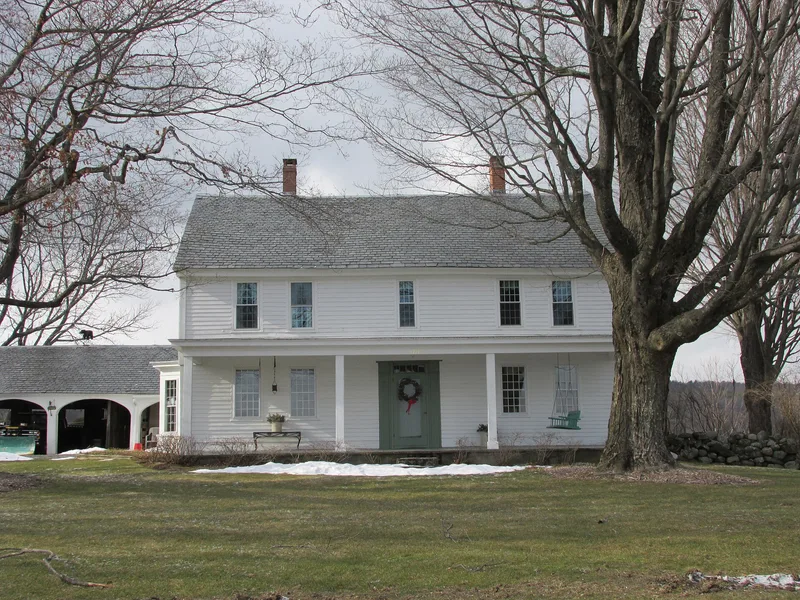
On the crest of Old Village Hill in Shelburne, a cemetery and a minister's house sit side by side. Hill Cemetery covers about two acres and holds more than 250 markers, mostly slate from nearby Ashfield and Goshen, followed by marble, granite and sandstone. The earliest stone dates to 1774. Carvers from the Deerfield School, including Solomon Ashley and John Locke, and the Chapin shop of Bernardston produced many of them. Their work moves from soul effigies to urns and weeping willows, and later to obelisks marking family plots. Next to the cemetery is the Parson Hubbard House, a 2½-story Federal building raised in 1778 for the Rev. Robert Hubbard, with an older kitchen ell from about 1773. Inside are paneled rooms, fireplace surrounds and sliding shutters. A carriage shed and barn from about 1880 and the foundations of a blacksmith shop complete the district, which preserves the early village center of Shelburne.
Machine-generated summary. This summary was generated by a language model from the official nomination document and has not been reviewed line by line by an editor. It may contain errors. Check the source document before relying on any detail. Source: nomination document (PDF) · catalog entry. Generated October 2026 (model claude-sonnet-5-5, prompt v1.0-2026-10-29).
| Styles | Early Republic - Federal |
|---|---|
| Areas of significance | Architecture, Art, Agriculture, Community Planning and Development |
| Acreage | 4.7 |
| Boundary source | NPS cultural-resource GIS polygon |
| Full listing page | Hill Cemetery and Parson Hubbard House Historic District (property record) |
What listing means for this property
This is a historic district. Buildings within its boundary are either contributing (they add to the district's significance) or non-contributing. Owners of contributing income-producing buildings can claim the 20% federal rehabilitation tax credit; homeowners should look at state credits. National Register districts impose no design review by themselves; a local historic district ordinance, if one exists, does (the difference explained).
General information, not legal or tax advice. Rules change; confirm with your State Historic Preservation Office or a qualified adviser.