High-School Streets Historic District

Why it's listed
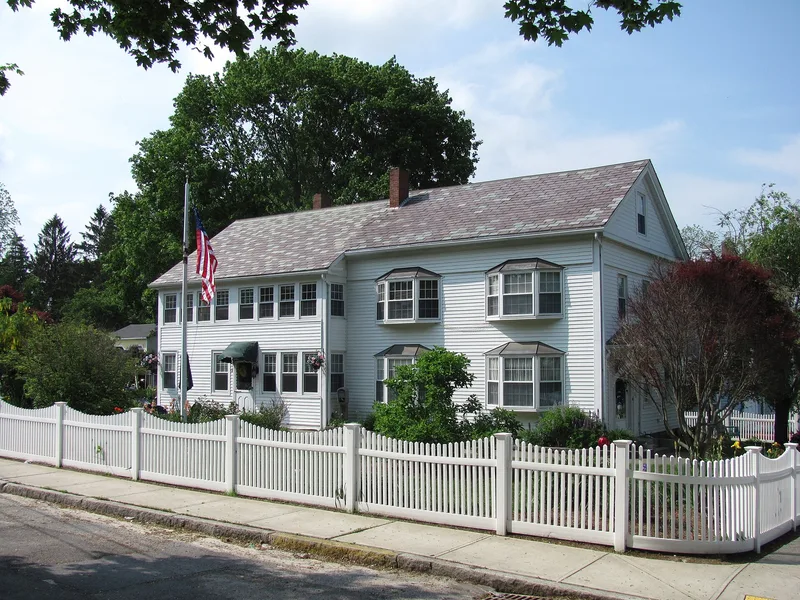
High and School Streets climb a hillside above the Hamilton Woolen Mill in Southbridge, Massachusetts. The district covers about four acres and contains fourteen one- and two-family houses from the mid-19th century, plus an early-20th century garage. The Hamilton Woolen Company owned the land and began selling house lots in 1844, requiring each buyer to build a house worth at least one thousand dollars. Growth followed the success of delaines cloth, which brought skilled mill workers, supervisors, foremen and merchants to Globe Village. Most houses are Greek Revival, often with a gable front, three-bay side-entry plan, corner pilasters, pedimented gables and entrances with sidelights and transoms. Italianate, Victorian vernacular and Stick style touches also appear. An unusually high share of the houses are brick, including the Kitching, Clemence and Whiting houses. The area is considered the largest and best preserved group of mid-19th century dwellings in the town and retains its original setting and design.
Machine-generated summary. This summary was generated by a language model from the official nomination document and has not been reviewed line by line by an editor. It may contain errors. Check the source document before relying on any detail. Source: nomination document (PDF) · catalog entry. Generated October 2026 (model claude-sonnet-5-5, prompt v1.0-2026-10-29).
| Period of significance | 1840s-1860s |
|---|---|
| Styles | Greek Revival, with Italianate and Victorian vernacular examples |
| Areas of significance | Industry, Architecture |
| Acreage | 4 |
| Boundary source | NPS cultural-resource GIS polygon |
| Full listing page | High-School Streets Historic District (property record) |
What listing means for this property
This is a historic district. Buildings within its boundary are either contributing (they add to the district's significance) or non-contributing. Owners of contributing income-producing buildings can claim the 20% federal rehabilitation tax credit; homeowners should look at state credits. National Register districts impose no design review by themselves; a local historic district ordinance, if one exists, does (the difference explained).
General information, not legal or tax advice. Rules change; confirm with your State Historic Preservation Office or a qualified adviser.