Hatch Homestead and Mill Historic District

Why it's listed
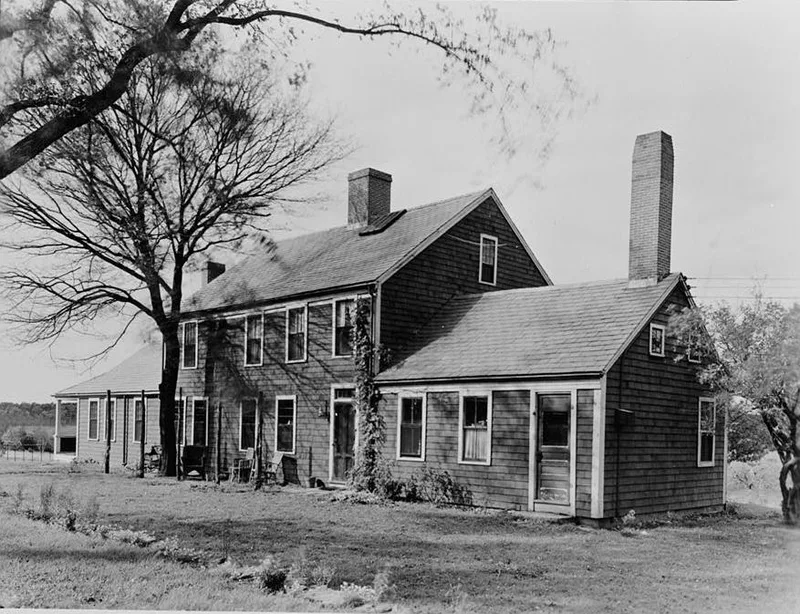
Set off Union Street in the Two Mile section of northern Marshfield, this 10.7-acre district joins a colonial farmhouse with a working-era mill complex. The Hatch Homestead, known as the Red House, is a five-bay, central-chimney timber-framed house likely dating to the early or mid 18th century. Its plank framing, exposed beams, winder stair and painted leopard-spot kitchen finish reflect building practices of the former Plymouth Colony region. Nearby, the Hatch Mill is a T-shaped timber-framed building. Its eastern sawmill core was built about 1812 by Joel Hatch, and the two-story box mill was added about 1859. The mill still holds its log carriage, saw-frame dados, driveshaft and traces of a breast-shot water wheel. The mill pond, dam, stone culvert and tailrace complete the setting. Generations of the Hatch family farmed here and ran fulling, grist, saw and box mills, giving the district a clear record of local rural industry in Marshfield.
Machine-generated summary. This summary was generated by a language model from the official nomination document and has not been reviewed line by line by an editor. It may contain errors. Check the source document before relying on any detail. Source: nomination document (PDF) · catalog entry. Generated October 2026 (model claude-sonnet-5-5, prompt v1.0-2026-10-29).
| Styles | Georgian |
|---|---|
| Areas of significance | Architecture, Community Planning and Development, Industry |
| Acreage | 10 |
| Boundary source | NPS cultural-resource GIS polygon |
| Full listing page | Hatch Homestead and Mill Historic District (property record) |
What listing means for this property
This is a historic district. Buildings within its boundary are either contributing (they add to the district's significance) or non-contributing. Owners of contributing income-producing buildings can claim the 20% federal rehabilitation tax credit; homeowners should look at state credits. National Register districts impose no design review by themselves; a local historic district ordinance, if one exists, does (the difference explained).
General information, not legal or tax advice. Rules change; confirm with your State Historic Preservation Office or a qualified adviser.