Harvard Houses Historic District

Why it's listed
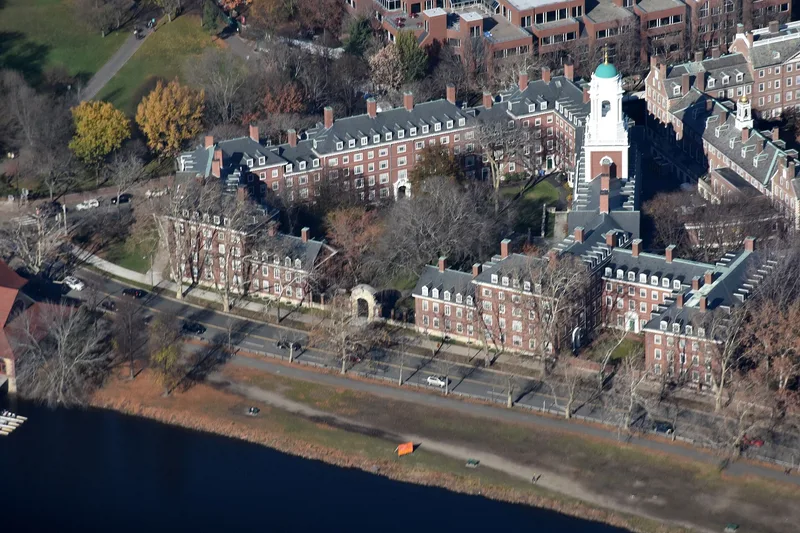
Along the Charles River in Cambridge, a group of Harvard undergraduate houses forms one of Greater Boston's most recognizable riverfront scenes. Most were built between 1913 and 1930 in the Georgian Revival style, largely by Shepley, Rutan & Coolidge and its successor firms. They grew out of President A. Lawrence Lowell's push to house students and faculty together, funded by gifts from Edward Harkness. Each house borrows details from a specific building in Old Harvard Yard or elsewhere, such as Massachusetts Hall, the Old State House and Holden Chapel. Houses include Kirkland, Eliot, Winthrop, Lowell, Dunster and McKinlock, along with the 1762 John Hicks House and several neo-Georgian clubs. Later modern buildings, including Quincy House, Leverett Towers, Mather House and Peabody Terrace, were added and are tied to the older houses by courtyards and open space. The district was listed for its architectural character and its link to the house system.
Machine-generated summary. This summary was generated by a language model from the official nomination document and has not been reviewed line by line by an editor. It may contain errors. Check the source document before relying on any detail. Source: nomination document (PDF) · catalog entry. Generated October 2026 (model claude-sonnet-5-5, prompt v1.0-2026-10-29).
| Period of significance | 1913-1930 |
|---|---|
| Styles | Georgian Revival (with later modern buildings) |
| Areas of significance | Education, Architecture |
| Acreage | 17.2 |
| Boundary source | NPS cultural-resource GIS polygon |
| Full listing page | Harvard Houses Historic District (property record) |
What listing means for this property
This is a historic district. Buildings within its boundary are either contributing (they add to the district's significance) or non-contributing. Owners of contributing income-producing buildings can claim the 20% federal rehabilitation tax credit; homeowners should look at state credits. National Register districts impose no design review by themselves; a local historic district ordinance, if one exists, does (the difference explained).
General information, not legal or tax advice. Rules change; confirm with your State Historic Preservation Office or a qualified adviser.