Harding-Winter Street Manufacturing District

The National Park Service has not published a boundary polygon for this district; the map shows the listed properties inside it and the district's reference point.
Why it's listed
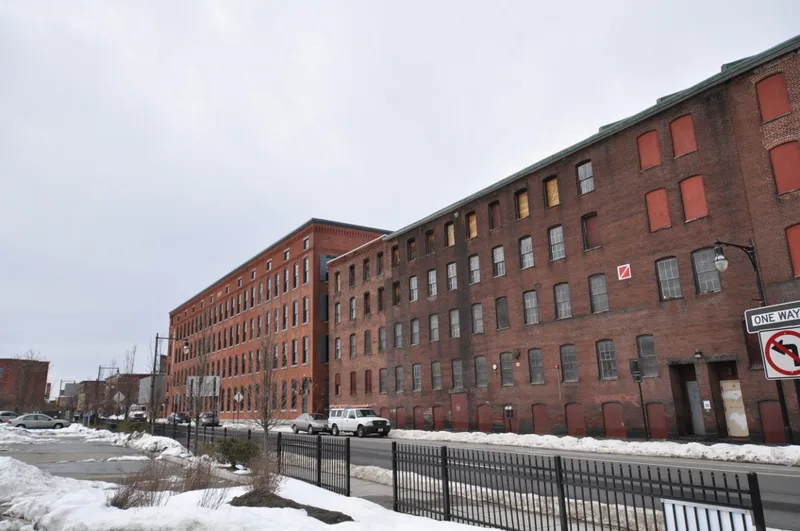
Harding and Winter Streets in central Worcester hold a cluster of brick factories built between 1870 and 1898, the surviving core of a once extensive manufacturing district. Construction of Interstate 290 in the 1970s and the decline of downtown manufacturing fragmented the larger area, but these nineteenth-century factories remain. The buildings include the J.H. & G.M. Walker Shoe Factory and storehouse, the Wachusett Building later enlarged for S.R. Heywood & Co., the Hill Envelope Company factory designed by Fuller & Delano, the Abraham Israel underwear factory, and the Worcester Stained Glass Works. The district was a leading center of boot and shoe making in the 1880s, and the Heywood Company was the city's largest shoe manufacturer in the 1890s and early twentieth century. Envelope, underwear and stained glass firms added variety typical of Worcester's industrial pattern. The area sits beside the filled bed of the Blackstone Canal, now Harding Street.
Machine-generated summary. This summary was generated by a language model from the official nomination document and has not been reviewed line by line by an editor. It may contain errors. Check the source document before relying on any detail. Source: nomination document (PDF) · catalog entry. Generated October 2026 (model claude-sonnet-5-5, prompt v1.0-2026-10-29).
| Period of significance | 1870-1906 |
|---|---|
| Styles | Varied Victorian industrial |
| Areas of significance | Industry, Architecture |
| Acreage | 2 |
| Boundary source | not published |
| Full listing page | Harding-Winter Street Manufacturing District (property record) |
What listing means for this property
This is a historic district. Buildings within its boundary are either contributing (they add to the district's significance) or non-contributing. Owners of contributing income-producing buildings can claim the 20% federal rehabilitation tax credit; homeowners should look at state credits. National Register districts impose no design review by themselves; a local historic district ordinance, if one exists, does (the difference explained).
General information, not legal or tax advice. Rules change; confirm with your State Historic Preservation Office or a qualified adviser.