Hammond Heights

Why it's listed
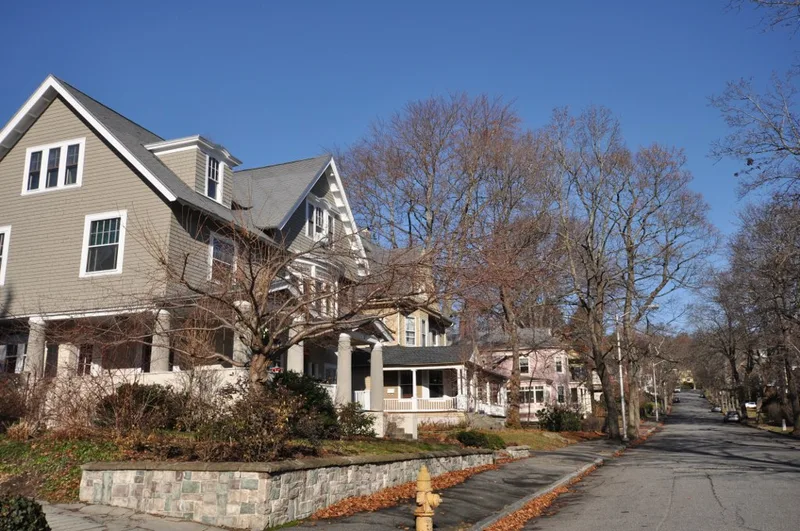
Hammond Heights is a hillside neighborhood on Worcester's West Side, made up of three blocks between Highland Street and Institute Road. It was once part of the John Hammond Farm, and a subdivision plan was prepared by 1886. Hammond's own Italianate house at 264 Highland Street, built about 1851, is the earliest building. Sixteen houses went up along Germain and Highland Streets between 1890 and 1896, about forty more followed on Westland and Haviland Streets by 1911, and the last house was finished by 1928. The district is valued for its range of styles, including Queen Anne, Colonial Revival, Arts & Crafts, Bungalow and Dutch Colonial. Most houses appear to have been designed by architects for the families who lived in them rather than for a developer. Good preservation, tree-lined streets and broad lawns make it a strong example of Worcester's turn-of-the-century suburban growth.
Machine-generated summary. This summary was generated by a language model from the official nomination document and has not been reviewed line by line by an editor. It may contain errors. Check the source document before relying on any detail. Source: nomination document (PDF) · catalog entry. Generated October 2026 (model claude-sonnet-5-5, prompt v1.0-2026-10-29).
| Period of significance | 1890-1918 |
|---|---|
| Styles | Mixed Victorian and early 20th century: Queen Anne, Colonial Revival, Arts & Crafts/Tudor, Bungalow, Dutch Colonial, and an Italianate house |
| Areas of significance | Architecture |
| Acreage | 22 |
| Boundary source | NPS cultural-resource GIS polygon |
| Full listing page | Hammond Heights (property record) |
What listing means for this property
This is a historic district. Buildings within its boundary are either contributing (they add to the district's significance) or non-contributing. Owners of contributing income-producing buildings can claim the 20% federal rehabilitation tax credit; homeowners should look at state credits. National Register districts impose no design review by themselves; a local historic district ordinance, if one exists, does (the difference explained).
General information, not legal or tax advice. Rules change; confirm with your State Historic Preservation Office or a qualified adviser.