Hamilton Historic District

Why it's listed
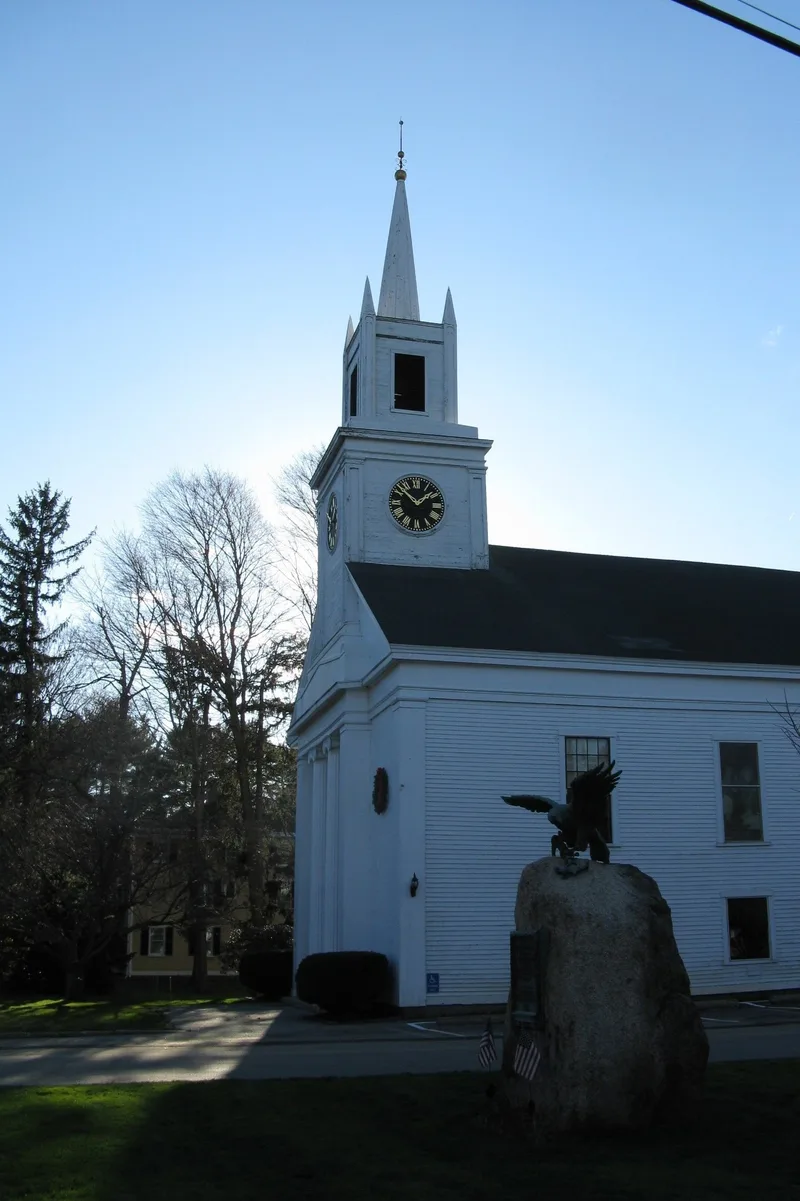
Along three-quarters of a mile of Bay Road in Hamilton, Massachusetts, a 62-acre district preserves the old village center once called The Hamlet, the Third Parish of Ipswich. Twenty houses from the early eighteenth through the nineteenth century sit beside a Greek Revival meeting house, a Colonial Revival Town Hall of 1898, a c. 1840 village store, a small green and a cemetery dating from 1706. Trees, stone walls and fences line the road, and no cross roads interrupt it. The area matters as the core from which the town grew after it separated from Ipswich in 1793. It was home to town leaders and to Rev. Manasseh Cutler, who lived at 624 Bay Road and worked for the Ohio Company of Associates on the purchase of Northwest Territory land and on the Ordinance of 1787. A company of local men left from his house in December 1787 to found Marietta, Ohio. The center still resembles its appearance on maps of 1856 to 1884.
Machine-generated summary. This summary was generated by a language model from the official nomination document and has not been reviewed line by line by an editor. It may contain errors. Check the source document before relying on any detail. Source: nomination document (PDF) · catalog entry. Generated October 2026 (model claude-sonnet-5-5, prompt v1.0-2026-10-29).
| Styles | Mainly Greek Revival, with Federal, Colonial Revival, saltbox and bracketed elements |
|---|---|
| Areas of significance | Architecture, Philosophy, Agriculture |
| Acreage | 62.1 |
| Boundary source | NPS cultural-resource GIS polygon |
| Full listing page | Hamilton Historic District (property record) |
What listing means for this property
This is a historic district. Buildings within its boundary are either contributing (they add to the district's significance) or non-contributing. Owners of contributing income-producing buildings can claim the 20% federal rehabilitation tax credit; homeowners should look at state credits. National Register districts impose no design review by themselves; a local historic district ordinance, if one exists, does (the difference explained).
General information, not legal or tax advice. Rules change; confirm with your State Historic Preservation Office or a qualified adviser.