Hadley Center Historic District (Boundary Increase)

Why it's listed
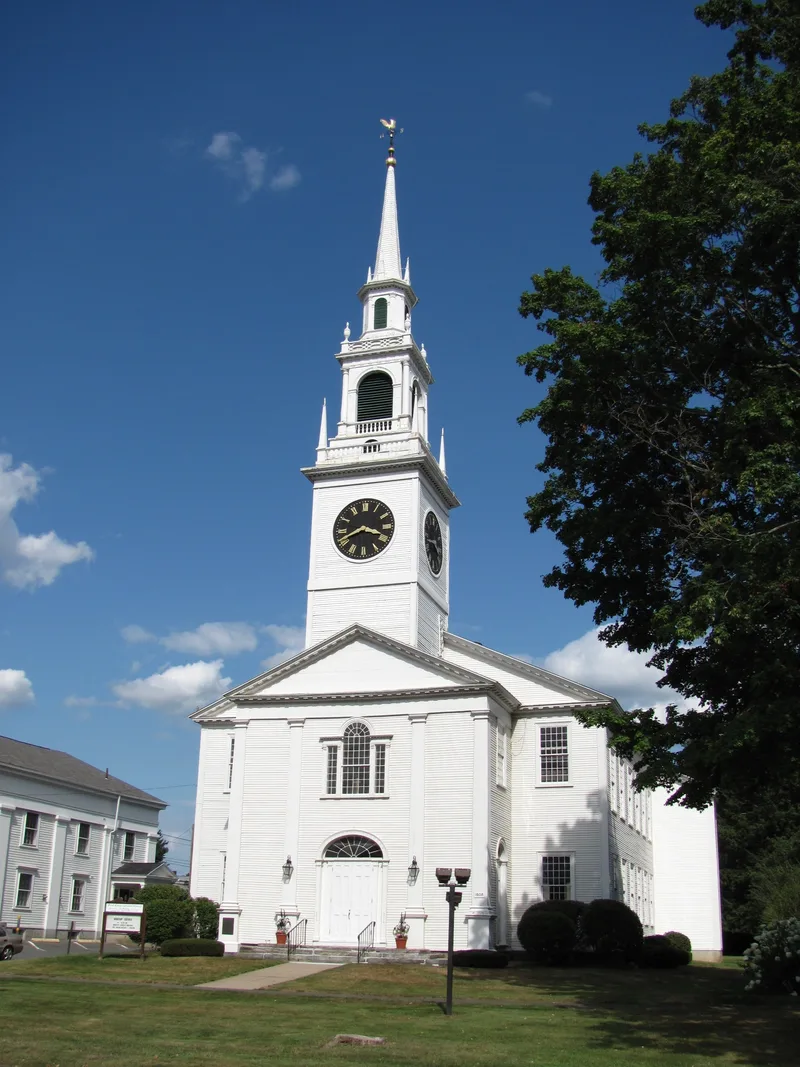
Hadley's historic center covers a broad area around the Town Common, including West, Middle, East and Russell Streets and Bay Road. It adds hundreds of buildings to an earlier listing that focused on civic structures facing the common. The district traces the town from its mid-17th-century settlement to its years as a market gardening center. West Street holds side-gabled Georgian and Federal farmhouses, among them the 1713 Samuel Porter House, the town's oldest surviving residence. Middle Street has Greek Revival houses of merchants and entrepreneurs, while lower Russell Street has modest Queen Anne houses built along a streetcar line. East Street has Colonial Revival and Craftsman houses built for immigrant farmers. Early 20th-century civic buildings include the 1894 Russell School, the 1902 Goodwin Memorial Library and Hooker School. The Hadley Farm Museum occupies an 1782 barn moved to its site in 1930. Together these resources show a full range of New England village architecture from 1700 to 1935.
Machine-generated summary. This summary was generated by a language model from the official nomination document and has not been reviewed line by line by an editor. It may contain errors. Check the source document before relying on any detail. Source: nomination document (PDF) · catalog entry. Generated October 2026 (model claude-sonnet-5-5, prompt v1.0-2026-10-29).
| Styles | Georgian, Federal, Greek Revival, Queen Anne, Colonial Revival, Craftsman |
|---|---|
| Areas of significance | Agriculture, Prehistoric, Commerce, Community Planning and Development, Education, Architecture |
| Acreage | 2500 |
| Boundary source | NPS cultural-resource GIS polygon |
| Full listing page | Hadley Center Historic District (Boundary Increase) (property record) |
What listing means for this property
This is a historic district. Buildings within its boundary are either contributing (they add to the district's significance) or non-contributing. Owners of contributing income-producing buildings can claim the 20% federal rehabilitation tax credit; homeowners should look at state credits. National Register districts impose no design review by themselves; a local historic district ordinance, if one exists, does (the difference explained).
General information, not legal or tax advice. Rules change; confirm with your State Historic Preservation Office or a qualified adviser.