Hadley Center Historic District

Why it's listed
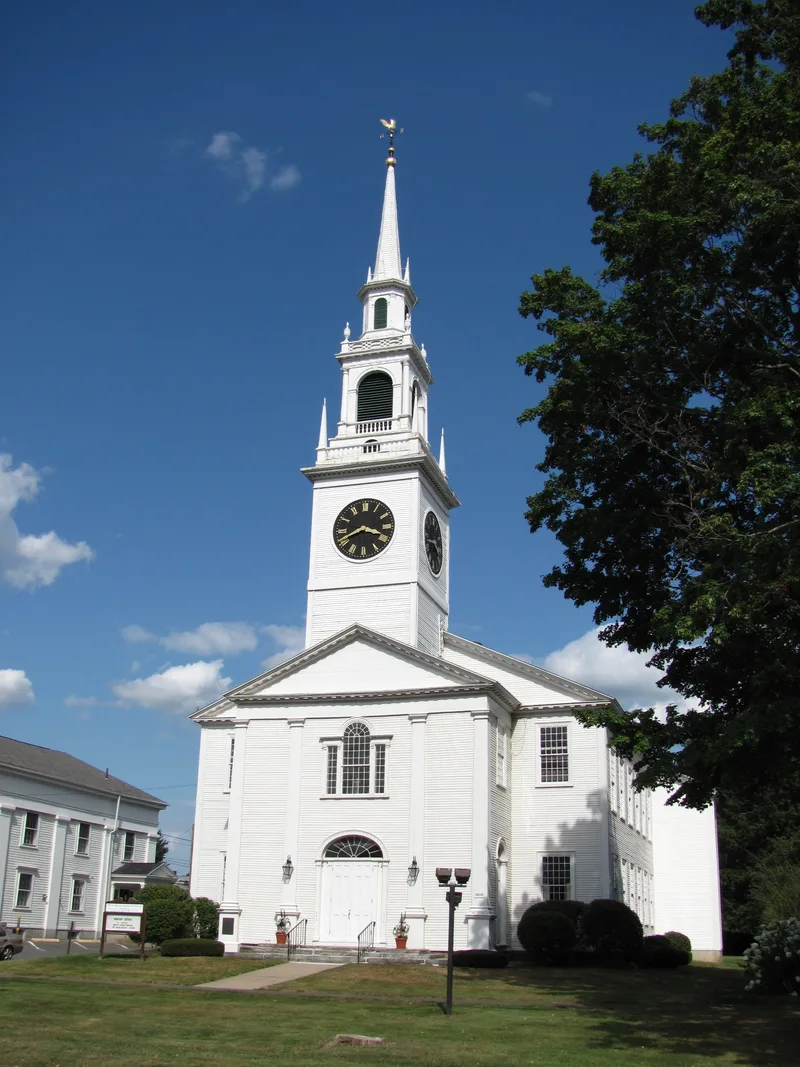
Hadley Center is a cluster of 17 buildings around a tree-lined green at the crossing of Middle and Russell Streets, the two main highways through Hadley, Massachusetts. The oldest building is the White-Duggan House, built around 1775. Public and church buildings anchor the group: the 1841 Greek Revival Town Hall, the 1804 First Congregational Church moved to its site in 1841, the 1902 Goodwin Memorial Library, and the 1894 Russell School, which housed Hopkins Academy. The Farm Museum began as an 1782 barn moved to the site in 1930. Houses by local builders such as Jonathan and Dwight Marsh add Federal, Gothic Revival and Colonial Revival character. Together the buildings show how a New England town center grew over roughly 150 years and continues to serve as the hub of town activity, even though the surrounding area is now mostly modern commercial development.
Machine-generated summary. This summary was generated by a language model from the official nomination document and has not been reviewed line by line by an editor. It may contain errors. Check the source document before relying on any detail. Source: nomination document (PDF) · catalog entry. Generated October 2026 (model claude-sonnet-5-5, prompt v1.0-2026-10-29).
| Styles | Mixed: Georgian Revival, Greek Revival, Colonial Revival, Gothic Revival, Federal-era meetinghouse, Richardsonian influence |
|---|---|
| Areas of significance | Agriculture, Social History, Architecture, Education |
| Acreage | 15 |
| Boundary source | NPS cultural-resource GIS polygon |
| Full listing page | Hadley Center Historic District (property record) |
What listing means for this property
This is a historic district. Buildings within its boundary are either contributing (they add to the district's significance) or non-contributing. Owners of contributing income-producing buildings can claim the 20% federal rehabilitation tax credit; homeowners should look at state credits. National Register districts impose no design review by themselves; a local historic district ordinance, if one exists, does (the difference explained).
General information, not legal or tax advice. Rules change; confirm with your State Historic Preservation Office or a qualified adviser.