Green Hill Historic District

Why it's listed
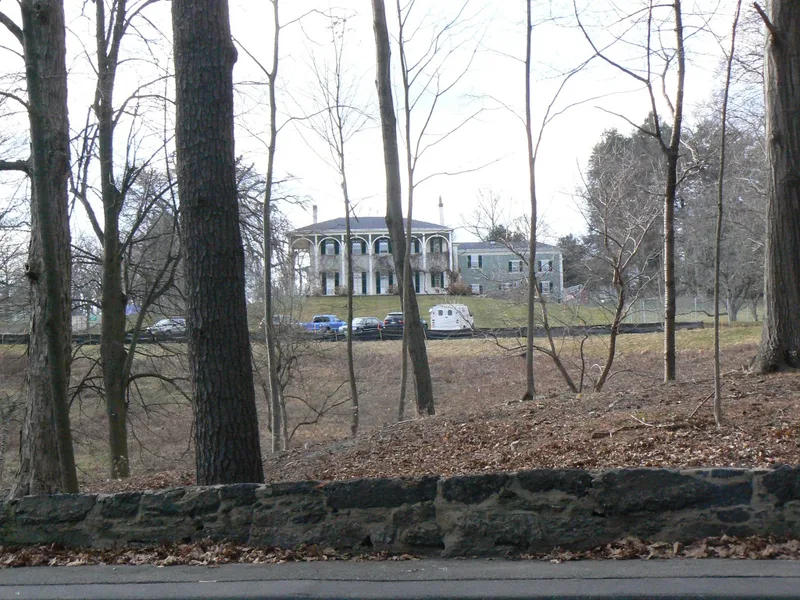
Green Hill is a neighborhood of about 70 acres in Brookline, Massachusetts, centered on Warren Street, Cottage Street and part of the former Sargent estate. Its roughly two dozen houses range from late 18th-century farmhouses to early 20th-century residences, many set on large landscaped lots. Three summer homes in the West Indies style, with overhanging roofs on light columns, are the most notable buildings, alongside Federal and Gothic Revival houses and the 1845 stone Sargent house attributed to Richard Upjohn. Land here passed from early colonial allotments to Brookline farmers, then in 1793 to merchant George Cabot, beginning a wave of wealthy Boston merchant families who built summer homes. The area also has a strong horticultural tradition, including the Holm Lea estate of Ignatius and Charles Sprague Sargent and landscape work linked to the Olmsted firm. Narrow winding roads, stone walls and preserved plantings keep its 19th-century feel.
Machine-generated summary. This summary was generated by a language model from the official nomination document and has not been reviewed line by line by an editor. It may contain errors. Check the source document before relying on any detail. Source: nomination document (PDF) · catalog entry. Generated October 2026 (model claude-sonnet-5-5, prompt v1.0-2026-10-29).
| Styles | West Indies style, Federal, Gothic Revival, Shingle, Medieval Revival, English Cottage and Jacobethan |
|---|---|
| Areas of significance | Community Planning and Development, Landscape Architecture, Architecture |
| Acreage | 70 |
| Boundary source | NPS cultural-resource GIS polygon |
| Full listing page | Green Hill Historic District (property record) |
What listing means for this property
This is a historic district. Buildings within its boundary are either contributing (they add to the district's significance) or non-contributing. Owners of contributing income-producing buildings can claim the 20% federal rehabilitation tax credit; homeowners should look at state credits. National Register districts impose no design review by themselves; a local historic district ordinance, if one exists, does (the difference explained).
General information, not legal or tax advice. Rules change; confirm with your State Historic Preservation Office or a qualified adviser.