Gray Gardens East and West Historic District

Why it's listed
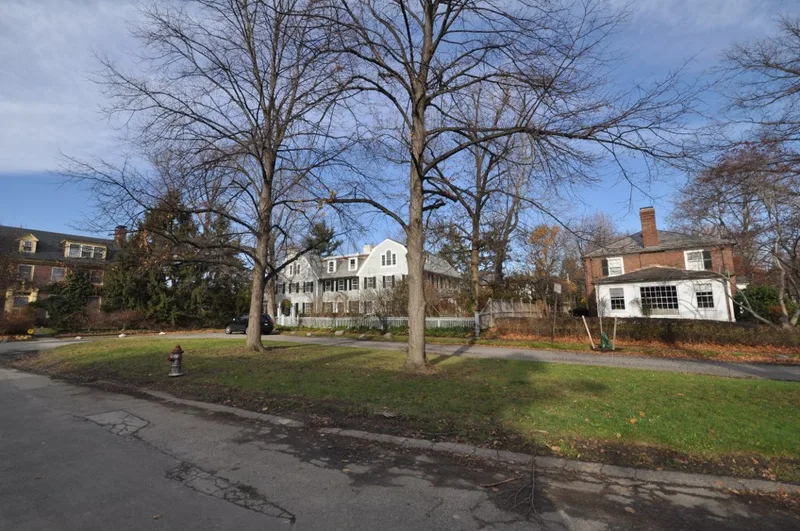
Gray Gardens East and West is a compact residential enclave in the Observatory Hill area of Cambridge, laid out in 1922 on the former Dresser estate. Neighbors worried that a speculator would fill the land with rows of two-family housing, so they formed the Garden Street Trust, bought the land and adopted thirty-year restrictions. Occupancy was limited to single families, lots could not be sold to builders or speculators, and an architectural control board reviewed designs. Most of the 28 buildings went up between 1922 and 1930, mainly in Neo-Georgian and Colonial Revival styles, and three firms designed sixteen of them. Exceptions include the Neo-Tudor house Graham Carey designed for himself and the 1798 Hall Tavern, moved from South Duxbury in 1930. House costs ranged widely, yet the streets remain notably harmonious. The district is recognized as a planned 1920s neighborhood with strong architectural and community design integrity.
Machine-generated summary. This summary was generated by a language model from the official nomination document and has not been reviewed line by line by an editor. It may contain errors. Check the source document before relying on any detail. Source: nomination document (PDF) · catalog entry. Generated October 2026 (model claude-sonnet-5-5, prompt v1.0-2026-10-29).
| Period of significance | 1922-1930 |
|---|---|
| Styles | Georgian Revival / Neo-Georgian, with Colonial Revival, Neo-Tudor, Shingle Style and Federal/Georgian exceptions |
| Areas of significance | Community Planning and Development, Architecture |
| Acreage | 6.4 |
| Boundary source | NPS cultural-resource GIS polygon |
| Full listing page | Gray Gardens East and West Historic District (property record) |
What listing means for this property
This is a historic district. Buildings within its boundary are either contributing (they add to the district's significance) or non-contributing. Owners of contributing income-producing buildings can claim the 20% federal rehabilitation tax credit; homeowners should look at state credits. National Register districts impose no design review by themselves; a local historic district ordinance, if one exists, does (the difference explained).
General information, not legal or tax advice. Rules change; confirm with your State Historic Preservation Office or a qualified adviser.