Gray Cliff Historic District

Why it's listed
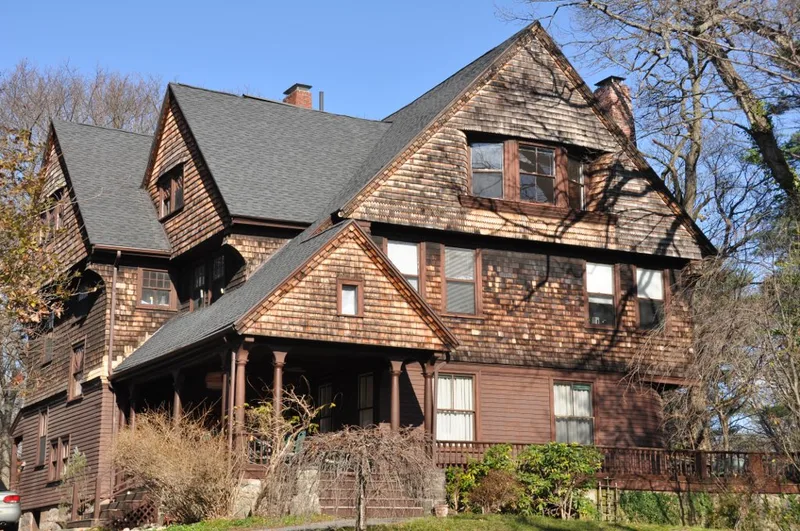
Gray Cliff Historic District is a small residential enclave in Newton Centre made up of eight houses built mostly in the 1880s and 1890s. Together they form one of the city's few clusters of Shingle Style homes, with a few Colonial Revival examples. The house at 53 Gray Cliff Road is considered among the city's finest Shingle Style designs, while 65 Gray Cliff Road pairs a fieldstone first story with shingled upper floors. The land was once part of the estate of Robert R. Bishop, a judge, state senate president and city water commissioner. After Commonwealth Avenue was built, pressure grew to subdivide large estates. Developers of this area used the steep ledges and rocky outcroppings, laying out a winding road and house lots in the picturesque tradition. The Circuit Railroad, which began regular service in 1886, made the area attractive to wealthy Boston businessmen and professionals. The layout may have been drawn by Herbert Killoway, a draughtsman in Frederick Law Olmsted's office, though this is not proven.
Machine-generated summary. This summary was generated by a language model from the official nomination document and has not been reviewed line by line by an editor. It may contain errors. Check the source document before relying on any detail. Source: nomination document (PDF) · catalog entry. Generated October 2026 (model claude-sonnet-5-5, prompt v1.0-2026-10-29).
| Styles | Shingle Style and Colonial Revival |
|---|---|
| Areas of significance | Architecture |
| Acreage | 6.3 |
| Boundary source | NPS cultural-resource GIS polygon |
| Full listing page | Gray Cliff Historic District (property record) |
What listing means for this property
This is a historic district. Buildings within its boundary are either contributing (they add to the district's significance) or non-contributing. Owners of contributing income-producing buildings can claim the 20% federal rehabilitation tax credit; homeowners should look at state credits. National Register districts impose no design review by themselves; a local historic district ordinance, if one exists, does (the difference explained).
General information, not legal or tax advice. Rules change; confirm with your State Historic Preservation Office or a qualified adviser.