Graffam Development Historic District

Why it's listed
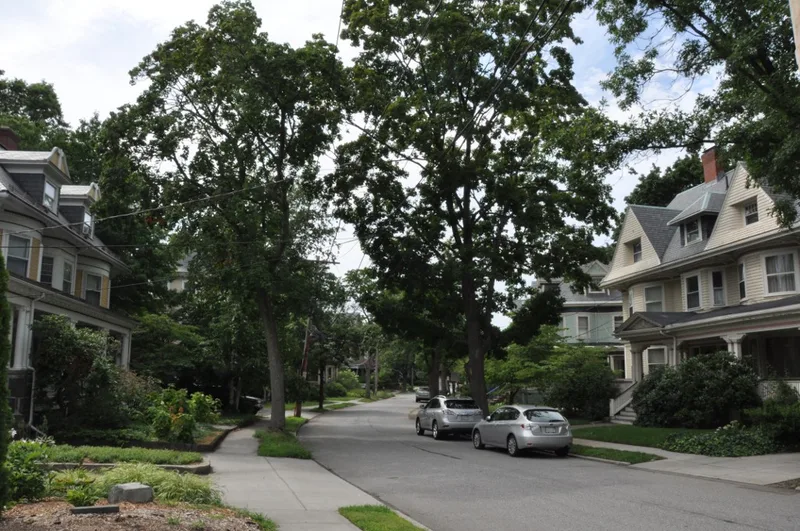
Graffam Development is a residential neighborhood in North Brookline, Massachusetts, laid out by developer Peter Graffam of Malden. Construction began in 1894 and finished with a house on Manchester Road in 1906-07. The district covers roughly nine acres around Abbottsford and Manchester Roads, with nearby frontage on Babcock Street and Naples Road. Its houses are large single-family homes on lots of six or seven thousand square feet, set back 20 to 25 feet from the street. Many were designed by the same firms, including Greenleaf and Cobb, which gives the streets consistent clapboard, shingle and beveled siding, porches, turrets, pedimented dormers and Colonial Revival detailing. The neighborhood grew from the widening of Beacon Street in 1888-89 and the arrival of the electric streetcar, and early residents were mostly managers and executives of Boston firms. In 1921 Joseph P. Kennedy bought 51 Abbottsford Road, later known as the birthplace of Robert F. Kennedy. The area was recognized for its architectural harmony and its link to streetcar-era development.
Machine-generated summary. This summary was generated by a language model from the official nomination document and has not been reviewed line by line by an editor. It may contain errors. Check the source document before relying on any detail. Source: nomination document (PDF) · catalog entry. Generated October 2026 (model claude-sonnet-5-5, prompt v1.0-2026-10-29).
| Period of significance | 1895-1906 |
|---|---|
| Styles | Colonial Revival and transitional Queen Anne/Colonial Revival |
| Areas of significance | Community Planning and Development, Architecture |
| Acreage | 9 |
| Boundary source | NPS cultural-resource GIS polygon |
| Full listing page | Graffam Development Historic District (property record) |
What listing means for this property
This is a historic district. Buildings within its boundary are either contributing (they add to the district's significance) or non-contributing. Owners of contributing income-producing buildings can claim the 20% federal rehabilitation tax credit; homeowners should look at state credits. National Register districts impose no design review by themselves; a local historic district ordinance, if one exists, does (the difference explained).
General information, not legal or tax advice. Rules change; confirm with your State Historic Preservation Office or a qualified adviser.