Government Island Historic District

Why it's listed
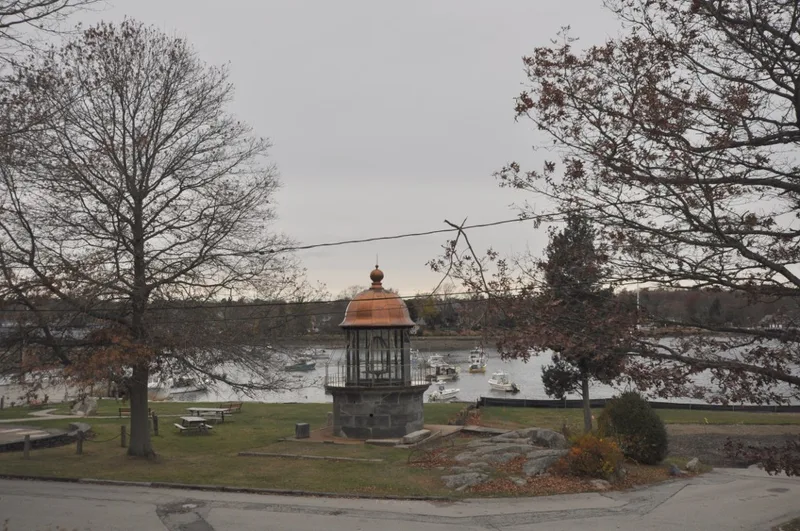
Government Island, in Cohasset Harbor, holds the surviving shore station for the second Minot's Ledge Lighthouse, the oldest surviving lighthouse in the country built directly in the sea. Between 1855 and 1860 the island was the mainland base for the project. Granite blocks from Quincy were cut and trial-fitted here on two 30-foot circular stone platforms before boats carried them to the ledge. Captain Barton S. Alexander of the Corps of Engineers supervised the work from Joseph G. Totten's plans, and the crew finished without a death or serious injury. The district includes an engineer's office, a double house for assistant keepers, a brick oil house, a large granite wharf, and Beacon Rock, used for observation and signaling. The lighthouse's fog bell and its original watchroom were later moved to the island. Today the site serves as a public park, fishing landing and sailing club location, and it keeps the character of a mid-nineteenth-century engineering and residential facility.
Machine-generated summary. This summary was generated by a language model from the official nomination document and has not been reviewed line by line by an editor. It may contain errors. Check the source document before relying on any detail. Source: nomination document (PDF) · catalog entry. Generated October 2026 (model claude-sonnet-5-5, prompt v1.0-2026-10-29).
| Period of significance | 1825-1947 |
|---|---|
| Styles | No style |
| Areas of significance | Architecture, Maritime History, Engineering |
| Acreage | 7.4 |
| Boundary source | NPS cultural-resource GIS polygon |
| Full listing page | Government Island Historic District (property record) |
What listing means for this property
This is a historic district. Buildings within its boundary are either contributing (they add to the district's significance) or non-contributing. Owners of contributing income-producing buildings can claim the 20% federal rehabilitation tax credit; homeowners should look at state credits. National Register districts impose no design review by themselves; a local historic district ordinance, if one exists, does (the difference explained).
General information, not legal or tax advice. Rules change; confirm with your State Historic Preservation Office or a qualified adviser.