Glendale Power House

Why it's listed
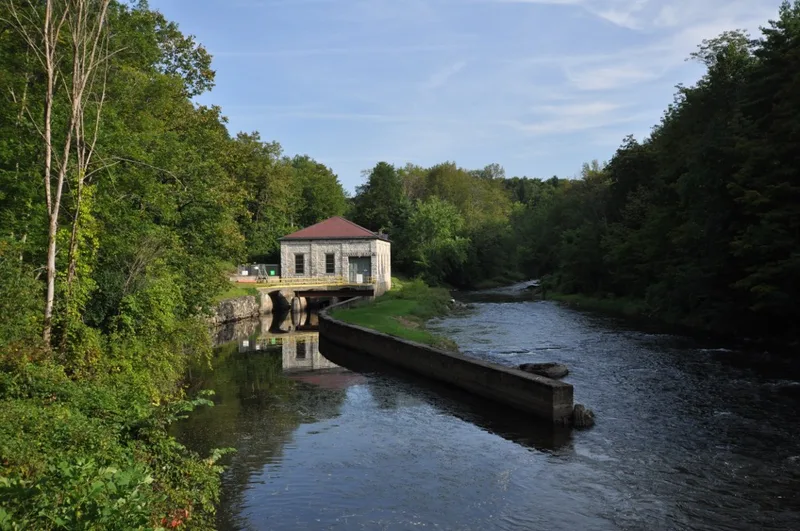
Along the Housatonic River in Stockbridge, this 13.32-acre complex includes a 28-foot dam, a 1,500-foot power canal, a bulkhead, trash racks, control gates and a 200-foot iron penstock feeding a small stone power house. The 50 by 68 foot building has coursed random ashlar walls, much of the stone salvaged from the nearby Glendale Woolen Mill, a slate-shingled steel truss hip roof and a single large interior room for turbines and generators. Monument Mills, a cotton textile company downstream in Housatonic, bought the water rights in 1905 because low summer water limited its operations. Construction began that July under contractor J.R. Lee, and the plant was dedicated in January 1907. By 1909 it provided half of the mills' power, and it later supplied part of Stockbridge until closing in 1946. The equipment was scrapped around 1950, and a conservation group began restoring it as a hydroelectric and educational project.
Machine-generated summary. This summary was generated by a language model from the official nomination document and has not been reviewed line by line by an editor. It may contain errors. Check the source document before relying on any detail. Source: nomination document (PDF) · catalog entry. Generated October 2026 (model claude-sonnet-5-5, prompt v1.0-2026-10-29).
| Period of significance | 1900- (specific dates 1905, 1907) |
|---|---|
| Areas of significance | Industry, Engineering |
| Acreage | 13.3 |
| Boundary source | NPS cultural-resource GIS polygon |
| Full listing page | Glendale Power House (property record) |
What listing means for this property
This is a historic district. Buildings within its boundary are either contributing (they add to the district's significance) or non-contributing. Owners of contributing income-producing buildings can claim the 20% federal rehabilitation tax credit; homeowners should look at state credits. National Register districts impose no design review by themselves; a local historic district ordinance, if one exists, does (the difference explained).
General information, not legal or tax advice. Rules change; confirm with your State Historic Preservation Office or a qualified adviser.