Gilbertville Historic District

Why it's listed
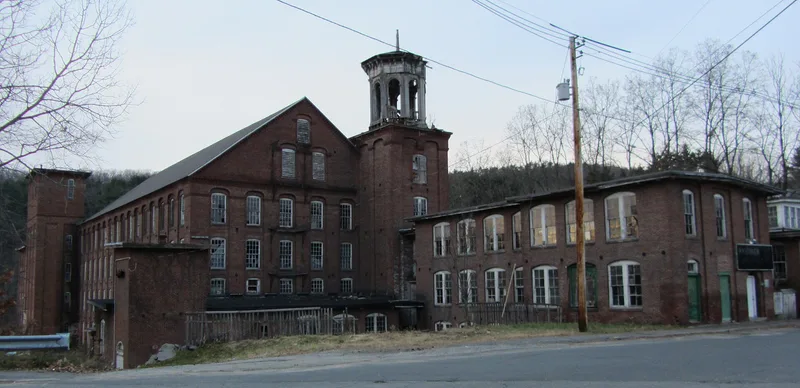
Gilbertville is a mill village on the Ware River in Hardwick, Massachusetts, built mostly by the George H. Gilbert Manufacturing Company between 1860 and 1930. Large brick mills dominate the landscape, surrounded by company-built tenement blocks, duplexes and row houses for workers. The company also provided stores, a post office, schools, meeting places, a library and an outstanding Congregational church. Housing was sited by type, with small-unit buildings near the river and larger houses and public buildings along Main Street. East of the company land, a privately developed service community grew along Church Street, with shops, a hotel, two-family houses and the Roman Catholic church, school, rectory and convent. Styles range from Italianate and Stick to Colonial Revival. The village is significant as a largely intact example of a planned single-enterprise textile community, retaining nearly all buildings erected under Gilbert ownership. The district has 133 contributing resources.
Machine-generated summary. This summary was generated by a language model from the official nomination document and has not been reviewed line by line by an editor. It may contain errors. Check the source document before relying on any detail. Source: nomination document (PDF) · catalog entry. Generated October 2026 (model claude-sonnet-5-5, prompt v1.0-2026-10-29).
| Styles | No Style; Greek Revival; Gothic Revival; Italianate; Second Empire; Queen Anne; Stick; Shingle; Colonial Revival; Classical Revival; Bungalow |
|---|---|
| Areas of significance | Industry, Community Planning and Development, Economics, Engineering, Transportation, European, Architecture, Social History |
| Acreage | 75 |
| Boundary source | NPS cultural-resource GIS polygon |
| Full listing page | Gilbertville Historic District (property record) |
What listing means for this property
This is a historic district. Buildings within its boundary are either contributing (they add to the district's significance) or non-contributing. Owners of contributing income-producing buildings can claim the 20% federal rehabilitation tax credit; homeowners should look at state credits. National Register districts impose no design review by themselves; a local historic district ordinance, if one exists, does (the difference explained).
General information, not legal or tax advice. Rules change; confirm with your State Historic Preservation Office or a qualified adviser.