Gay Head-Aquinnah Town Center Historic District

Why it's listed
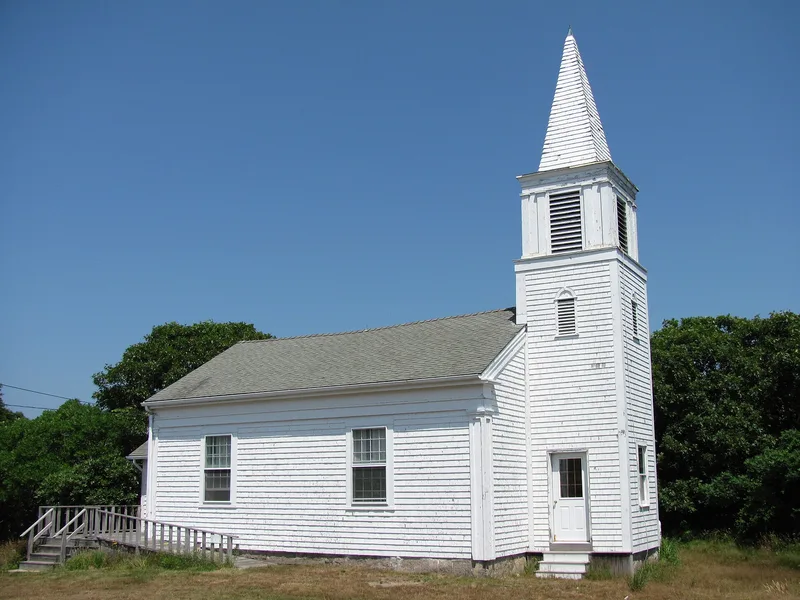
Gay Head, now Aquinnah, sits at the western tip of Martha's Vineyard, and its town center is a small cluster of modest shingled buildings at South Road and Church Street. The district covers about seven acres and includes a one-room school (ca. 1844, moved 1878) now used as the public library, a Baptist church (1850) and parsonage (1856) both moved in 1907, a former post office from the 1920s, and a Craftsman-style Town Hall/Community Center built in 1929. Two World War I monuments stand in front of the town hall, one honoring the town for sending more men to the war in proportion to its population than any other New England town. After South Road was laid out in 1870, families and institutions left the older Old South Road, and this group became the new center of community life. A newer town office and fire station are non-contributing. Archaeological potential is considered high.
Machine-generated summary. This summary was generated by a language model from the official nomination document and has not been reviewed line by line by an editor. It may contain errors. Check the source document before relying on any detail. Source: nomination document (PDF) · catalog entry. Generated October 2026 (model claude-sonnet-5-5, prompt v1.0-2026-10-29).
| Styles | Greek Revival; Bungalow/Craftsman; no style |
|---|---|
| Areas of significance | Architecture, Politics/Government, Education, Native American, Exploration/Settlement, Religion |
| Acreage | 7 |
| Boundary source | NPS cultural-resource GIS polygon |
| Full listing page | Gay Head-Aquinnah Town Center Historic District (property record) |
What listing means for this property
This is a historic district. Buildings within its boundary are either contributing (they add to the district's significance) or non-contributing. Owners of contributing income-producing buildings can claim the 20% federal rehabilitation tax credit; homeowners should look at state credits. National Register districts impose no design review by themselves; a local historic district ordinance, if one exists, does (the difference explained).
General information, not legal or tax advice. Rules change; confirm with your State Historic Preservation Office or a qualified adviser.