Fulton-Commercial Streets Historic District (Boundary Increase)

Why it's listed
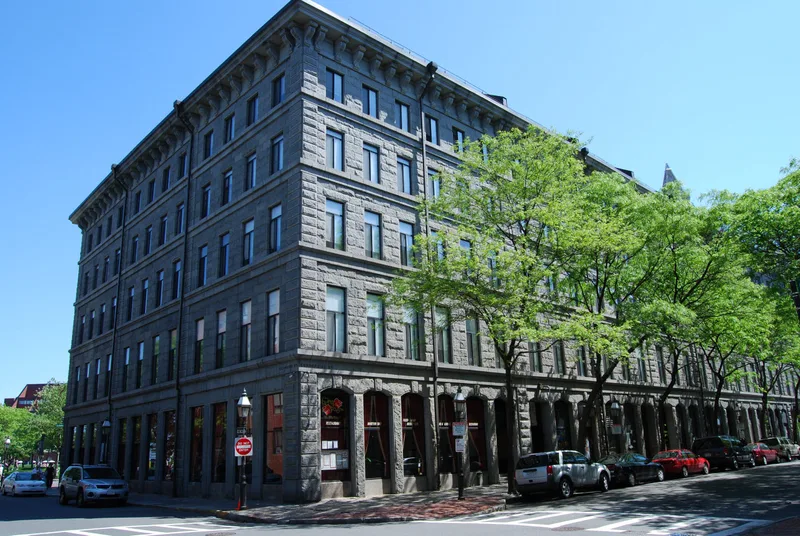
This amendment to a North End Boston historic district recognizes later buildings and extends the district's period of significance to 1949. The district grew on landfill near the waterfront as a commercial and industrial area, with four-story brick and granite rows built in the mid-19th century. Over time, owners added fifth and sixth floors, and a handful of new buildings appeared between 1883 and 1912, including the Goodnow Building, the Providence Packing Co. building at 134 Fulton Street, a store and warehouse at 145 Fulton Street, and the Chicago-style building at 210-218 Commercial Street. These structures show a move toward larger-scale manufacturing, storage and wholesale uses. The text also ties the district to successive waves of Irish, Italian and Jewish immigrants who worked in its shops and factories. Later changes, including Atlantic Avenue, the Callahan Tunnel and Central Artery construction, removed some buildings and altered the street plan.
Machine-generated summary. This summary was generated by a language model from the official nomination document and has not been reviewed line by line by an editor. It may contain errors. Check the source document before relying on any detail. Source: nomination document (PDF) · catalog entry. Generated October 2026 (model claude-sonnet-5-5, prompt v1.0-2026-10-29).
| Period of significance | 1865-1949 |
|---|---|
| Styles | Greek Revival; Victorian; Renaissance Revival |
| Areas of significance | Architecture, Commerce, Industry |
| Boundary source | NPS cultural-resource GIS polygon |
| Full listing page | Fulton-Commercial Streets Historic District (Boundary Increase) (property record) |
What listing means for this property
This is a historic district. Buildings within its boundary are either contributing (they add to the district's significance) or non-contributing. Owners of contributing income-producing buildings can claim the 20% federal rehabilitation tax credit; homeowners should look at state credits. National Register districts impose no design review by themselves; a local historic district ordinance, if one exists, does (the difference explained).
General information, not legal or tax advice. Rules change; confirm with your State Historic Preservation Office or a qualified adviser.