Fresh Pond Parkway-Metropolitan Park System of Greater Boston

Why it's listed
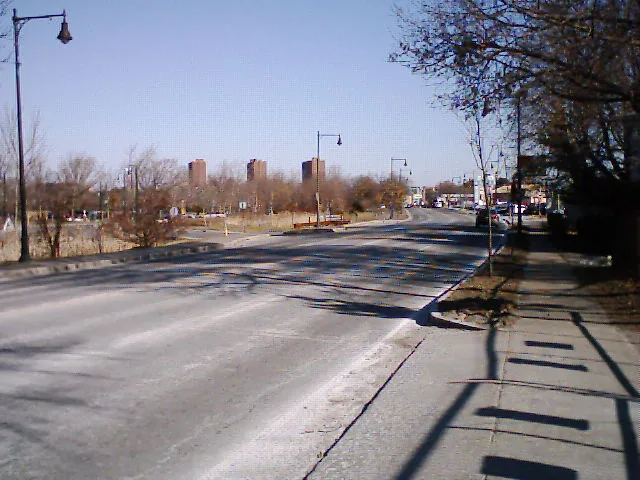
Fresh Pond Parkway is a curving, four-lane road in Cambridge, Massachusetts, running about a mile from the Concord Avenue/Alewife Brook rotary south to Mt. Auburn Street. It skirts the eastern edge of Fresh Pond and then passes through residential neighborhoods toward the Charles River. The parkway was built in 1899-1900 for the Metropolitan Park Commission to designs by Olmsted, Olmsted and Eliot and its successor firm, Olmsted Brothers, and it links parts of the Greater Boston metropolitan park system. Land acquisition began with Lowell Memorial Park in 1898, and a substantial amount of land was donated by John Chipman Gray. Surviving features include the 70-foot corridor, granite curbs, two rotaries transferred in 1928, a tree canopy of oaks and maples south of Huron Avenue, and a sloped median near Lowell Park. The parkway was recognized for its role in community planning, engineering, landscape architecture and transportation, and for illustrating the principles of parkway design.
Machine-generated summary. This summary was generated by a language model from the official nomination document and has not been reviewed line by line by an editor. It may contain errors. Check the source document before relying on any detail. Source: nomination document (PDF) · catalog entry. Generated October 2026 (model claude-sonnet-5-5, prompt v1.0-2026-10-29).
| Period of significance | 1898-1956 |
|---|---|
| Areas of significance | Community Planning and Development, Engineering, Landscape Architecture, Transportation |
| Boundary source | NPS cultural-resource GIS polygon |
| Full listing page | Fresh Pond Parkway-Metropolitan Park System of Greater Boston (property record) |
What listing means for this property
This is a historic district. Buildings within its boundary are either contributing (they add to the district's significance) or non-contributing. Owners of contributing income-producing buildings can claim the 20% federal rehabilitation tax credit; homeowners should look at state credits. National Register districts impose no design review by themselves; a local historic district ordinance, if one exists, does (the difference explained).
General information, not legal or tax advice. Rules change; confirm with your State Historic Preservation Office or a qualified adviser.