Freeman's Grove Historic District

Why it's listed
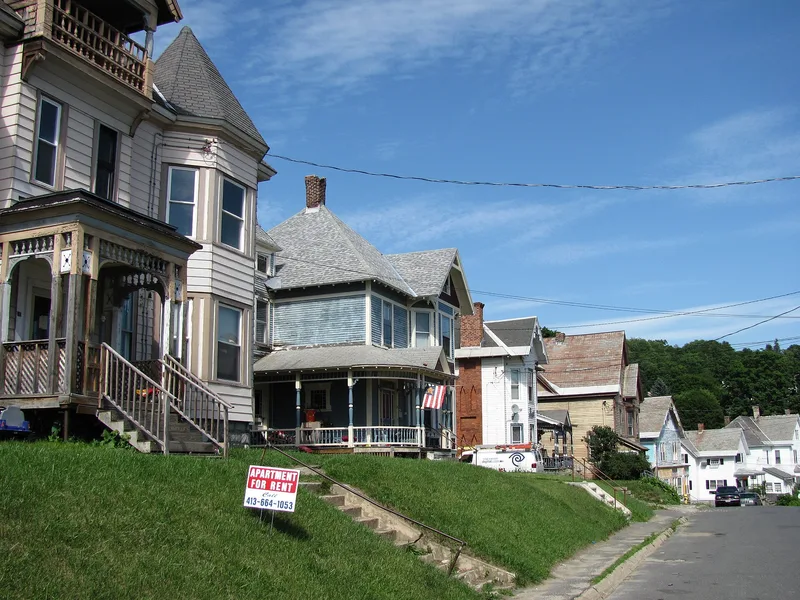
Freeman's Grove is a hillside neighborhood of 136 buildings just north of North Adams' river-side industrial center. Land owned by the Freeman Manufacturing Company stayed undeveloped until the area was platted into streets and lots in January 1887. Most houses went up between 1887 and 1894 as tenements, duplexes and a few single-family homes for mill workers, shopkeepers and small-business owners. Few were architect-designed. Local builders often adapted mail-order plans from firms such as the George F. Barber Company and Palliser, Palliser & Co., adding local millwork, corner towers and multi-tier porches. Queen Anne and Stick Style detailing dominates, with earlier Greek Revival and Italianate houses along Eagle Street and Chase Hill, and a few Colonial Revival houses from the 1890s. Construction ended soon after 1900, and no mid-20th century intrusions occur. The district is valued for its intact character and its link to the city's industrial growth.
Machine-generated summary. This summary was generated by a language model from the official nomination document and has not been reviewed line by line by an editor. It may contain errors. Check the source document before relying on any detail. Source: nomination document (PDF) · catalog entry. Generated October 2026 (model claude-sonnet-5-5, prompt v1.0-2026-10-29).
| Period of significance | 1887-1900 |
|---|---|
| Styles | Queen Anne and Stick Style, with some Greek Revival, Italianate, Shingle and Colonial Revival buildings |
| Areas of significance | Community Planning and Development, Architecture |
| Acreage | 250 |
| Boundary source | NPS cultural-resource GIS polygon |
| Full listing page | Freeman's Grove Historic District (property record) |
What listing means for this property
This is a historic district. Buildings within its boundary are either contributing (they add to the district's significance) or non-contributing. Owners of contributing income-producing buildings can claim the 20% federal rehabilitation tax credit; homeowners should look at state credits. National Register districts impose no design review by themselves; a local historic district ordinance, if one exists, does (the difference explained).
General information, not legal or tax advice. Rules change; confirm with your State Historic Preservation Office or a qualified adviser.