Franklin County Fairgrounds

Why it's listed
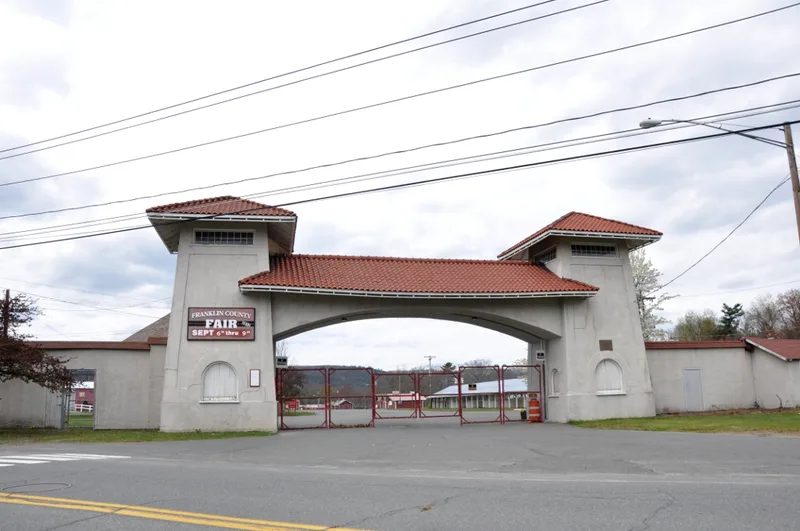
Franklin County Fairgrounds, on Wisdom Way in Greenfield, Massachusetts, is a 27.72-acre site that has hosted the county agricultural fair since 1876. The grounds hold 26 contributing and 10 noncontributing resources, including exhibition halls, animal barns, concession stands, a half-mile dirt racetrack and a wide midway. The oldest surviving building is the two-story, round Roundhouse of 1899, designed and built by Frank Orrin Wells. Wells also supported the Mission-style entrance gate of 1917, a stuccoed wood-frame structure with two three-story towers and clay tile roofs. Barns from about 1910 to 1940 and several red-painted buildings from the 1950s, including the large Dole Building and many church and club food stands, give the grounds a unified look. The fair grew out of the agricultural society's goal of promoting farming improvement through livestock and produce exhibits. Newer buildings, such as the 1980s grandstand, are classed as noncontributing.
Machine-generated summary. This summary was generated by a language model from the official nomination document and has not been reviewed line by line by an editor. It may contain errors. Check the source document before relying on any detail. Source: nomination document (PDF) · catalog entry. Generated October 2026 (model claude-sonnet-5-5, prompt v1.0-2026-10-29).
| Styles | Late 19th & 20th Century Revivals, Mission |
|---|---|
| Areas of significance | Agriculture, Architecture, Entertainment/Recreation |
| Acreage | 27.7 |
| Boundary source | NPS cultural-resource GIS polygon |
| Full listing page | Franklin County Fairgrounds (property record) |
What listing means for this property
This is a historic district. Buildings within its boundary are either contributing (they add to the district's significance) or non-contributing. Owners of contributing income-producing buildings can claim the 20% federal rehabilitation tax credit; homeowners should look at state credits. National Register districts impose no design review by themselves; a local historic district ordinance, if one exists, does (the difference explained).
General information, not legal or tax advice. Rules change; confirm with your State Historic Preservation Office or a qualified adviser.