Foxborough State Hospital

Why it's listed
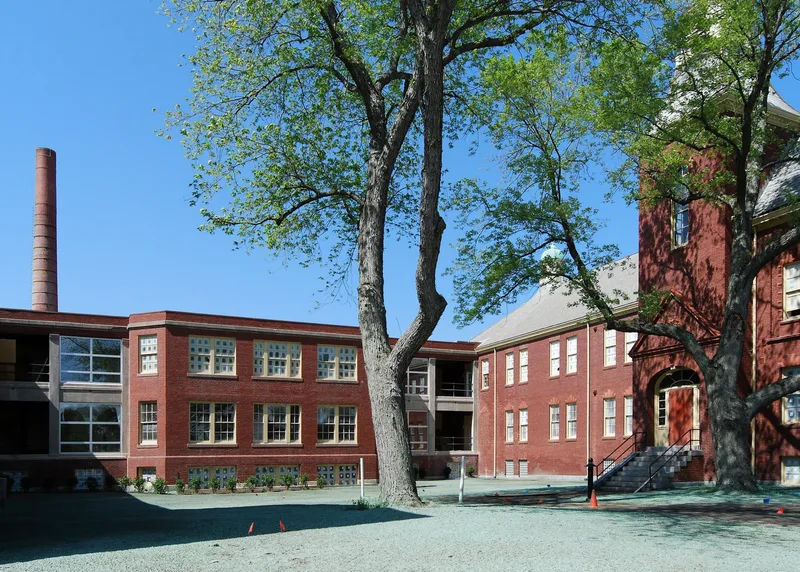
Foxborough State Hospital is a campus of red brick wards, support buildings and staff housing on Chestnut Street in Foxborough, Massachusetts. It began in 1889 as the Massachusetts Hospital for Dipsomaniacs and Inebriates, said to be the first state-run facility of its kind in the nation. The trustees chose the cottage plan, and Brigham & Spofford designed the earliest Queen Anne buildings, trimmed with terra-cotta. In 1914 the alcoholic patients moved to Norfolk, and the site became a standard state hospital. A 1915 plan by James E. McLaughlin, later joined by Houston Burr, linked the original wards and added an administration building and Classical Revival wards. Staff cottages, an assembly hall and other buildings followed through the 1930s. Landscape architect Joseph H. Curtis improved the grounds in 1895. The campus has changed little since about 1935, though deferred maintenance threatens the original wards. It was recognized for its role in treating alcoholism, its link to the state mental health system, and its architecture.
Machine-generated summary. This summary was generated by a language model from the official nomination document and has not been reviewed line by line by an editor. It may contain errors. Check the source document before relying on any detail. Source: nomination document (PDF) · catalog entry. Generated October 2026 (model claude-sonnet-5-5, prompt v1.0-2026-10-29).
| Period of significance | 1889-1940 |
|---|---|
| Styles | Late Victorian - Queen Anne; 19th & 20th century revivals - Colonial, Classical |
| Areas of significance | Social History, Health/Medicine, Architecture |
| Acreage | 176 |
| Boundary source | NPS cultural-resource GIS polygon |
| Full listing page | Foxborough State Hospital (property record) |
What listing means for this property
This is a historic district. Buildings within its boundary are either contributing (they add to the district's significance) or non-contributing. Owners of contributing income-producing buildings can claim the 20% federal rehabilitation tax credit; homeowners should look at state credits. National Register districts impose no design review by themselves; a local historic district ordinance, if one exists, does (the difference explained).
General information, not legal or tax advice. Rules change; confirm with your State Historic Preservation Office or a qualified adviser.