Foxborough Pumping Station

Why it's listed
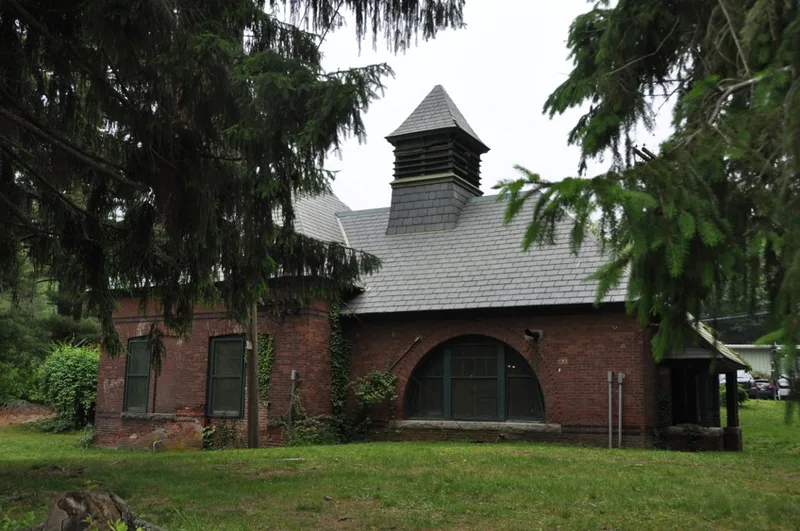
Foxborough's first public water supply is preserved at a 26.6-acre waterworks district off Chestnut Street. Its centerpiece is a one-story, L-shaped pumping station of Taunton brick, completed in 1891 to plans by Boston architect Ernest N. Boyden and built by William O'Connell of Canton. Each of its three rooms, for engine, boiler and coal, has its own pyramidal slate roof, and the engine room has a large Romanesque arched window. Other resources include a 1953 storage garage, three 1948 driven wells, man-made Fales Pond and the abandoned original well field of about twenty-four pipe heads. A 1989 chemical building and a 1972 well are noncontributing. The district reflects a long local effort: a waterworks vote failed in 1890 and passed in 1891 after the charter was changed to allow a majority vote. Boyden had designed several other Massachusetts pumping stations, and the Foxborough station follows his typical Queen Anne approach. The town still owns and uses the site for water supply.
Machine-generated summary. This summary was generated by a language model from the official nomination document and has not been reviewed line by line by an editor. It may contain errors. Check the source document before relying on any detail. Source: nomination document (PDF) · catalog entry. Generated October 2026 (model claude-sonnet-5-5, prompt v1.0-2026-10-29).
| Styles | Late Victorian: Queen Anne |
|---|---|
| Areas of significance | Architecture, Community Planning and Development, Engineering |
| Acreage | 26.6 |
| Boundary source | NPS cultural-resource GIS polygon |
| Full listing page | Foxborough Pumping Station (property record) |
What listing means for this property
This is a historic district. Buildings within its boundary are either contributing (they add to the district's significance) or non-contributing. Owners of contributing income-producing buildings can claim the 20% federal rehabilitation tax credit; homeowners should look at state credits. National Register districts impose no design review by themselves; a local historic district ordinance, if one exists, does (the difference explained).
General information, not legal or tax advice. Rules change; confirm with your State Historic Preservation Office or a qualified adviser.