Fort Warren

Why it's listed
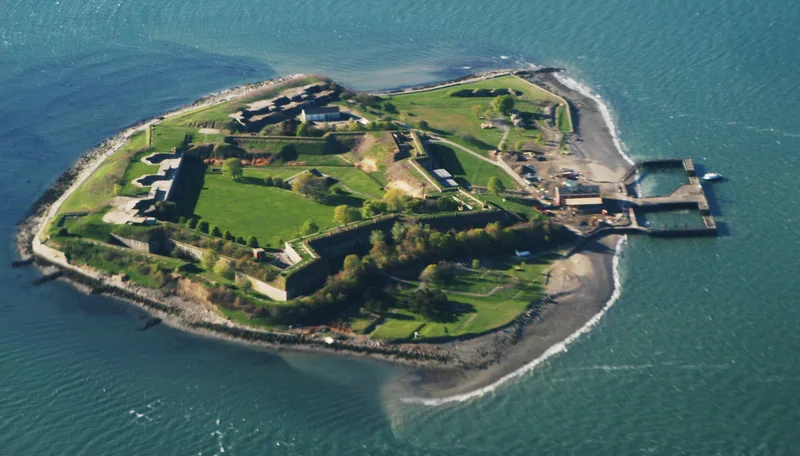
Fort Warren occupies Georges Island, a 40-acre oval at the throat of Boston Harbor. Construction began in 1834 under Lt. Col. Sylvanus Thayer of the Corps of Engineers and was finished during the Civil War. It is a bastioned star fort built mostly of Quincy granite, with walls eight feet thick enclosing a parade ground of about four acres. Casemate guns, howitzers and Columbiads once armed its fronts. Later modernization in 1871-1876 and 1898-1899 added gun mounts, and a power plant and a World War I mine storage building also survive, yet the star fort remains structurally close to its mid-19th-century form. The fort is valued as a leading example of the Third System of coastal defense and as Thayer's chief engineering work. It is also considered New England's most significant Civil War site because Confederate commissioners Mason and Slidell, generals, and Vice President Alexander Stephens were held there. The state now manages it as a park.
Machine-generated summary. This summary was generated by a language model from the official nomination document and has not been reviewed line by line by an editor. It may contain errors. Check the source document before relying on any detail. Source: nomination document (PDF) · catalog entry. Generated October 2026 (model claude-sonnet-5-5, prompt v1.0-2026-10-29).
| Styles | Bastioned star fort (Third System of coastal defense) |
|---|---|
| Areas of significance | Military, Architecture |
| Acreage | 4 |
| Boundary source | NPS cultural-resource GIS polygon |
| Full listing page | Fort Warren (property record) |
What listing means for this property
This is a historic district. Buildings within its boundary are either contributing (they add to the district's significance) or non-contributing. Owners of contributing income-producing buildings can claim the 20% federal rehabilitation tax credit; homeowners should look at state credits. National Register districts impose no design review by themselves; a local historic district ordinance, if one exists, does (the difference explained).
General information, not legal or tax advice. Rules change; confirm with your State Historic Preservation Office or a qualified adviser.