Fenway-Boylston Street District

Why it's listed
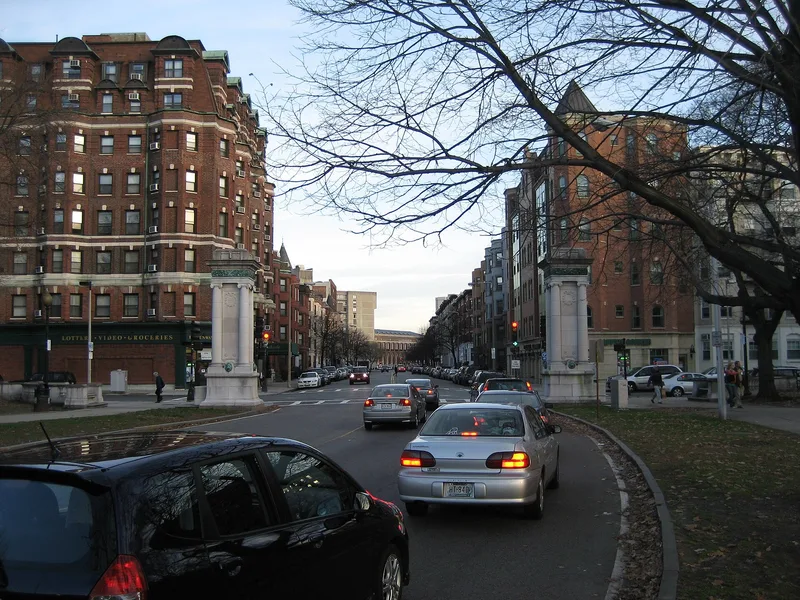
This block along The Fenway in Boston, on the northeast edge of the Back Bay Fens, holds twenty-one buildings and the Johnson Memorial Gates, all built between the 1890s and 1910. Anchored by large corner buildings, including the Massachusetts Historical Society, the Carleton Chambers hotel and the Henry Bigelow Williams House, the block runs between rows of townhouses. The earliest, at 40-50 The Fenway, are brick Queen Anne-influenced rows from 1892; later houses adopt flat-fronted Colonial Revival, Federal Revival and Neo-Classical designs in light brick and limestone. Architects included Robert S. Peabody, Guy Lowell, Wheelwright and Haven, and Shaw and Hunnewell. The district was listed for showing the change in Boston's architectural taste over a short span, for its ties to prominent local families and institutions, and for its relationship to Olmsted's Fens and parkway. Alterations are limited mostly to windows, doorways, fire escapes and one added story, and the block keeps a unified appearance with uniform setbacks and shared horizontal lines.
Machine-generated summary. This summary was generated by a language model from the official nomination document and has not been reviewed line by line by an editor. It may contain errors. Check the source document before relying on any detail. Source: nomination document (PDF) · catalog entry. Generated October 2026 (model claude-sonnet-5-5, prompt v1.0-2026-10-29).
| Period of significance | 1891-1910 |
|---|---|
| Styles | Queen Anne, Colonial Revival, Federal Revival, Neo-Classical Revival and Beaux Arts |
| Areas of significance | Community Planning and Development, Landscape Architecture, Architecture |
| Acreage | 3.3 |
| Boundary source | NPS cultural-resource GIS polygon |
| Full listing page | Fenway-Boylston Street District (property record) |
What listing means for this property
This is a historic district. Buildings within its boundary are either contributing (they add to the district's significance) or non-contributing. Owners of contributing income-producing buildings can claim the 20% federal rehabilitation tax credit; homeowners should look at state credits. National Register districts impose no design review by themselves; a local historic district ordinance, if one exists, does (the difference explained).
General information, not legal or tax advice. Rules change; confirm with your State Historic Preservation Office or a qualified adviser.