Elm Street Historic District

Why it's listed
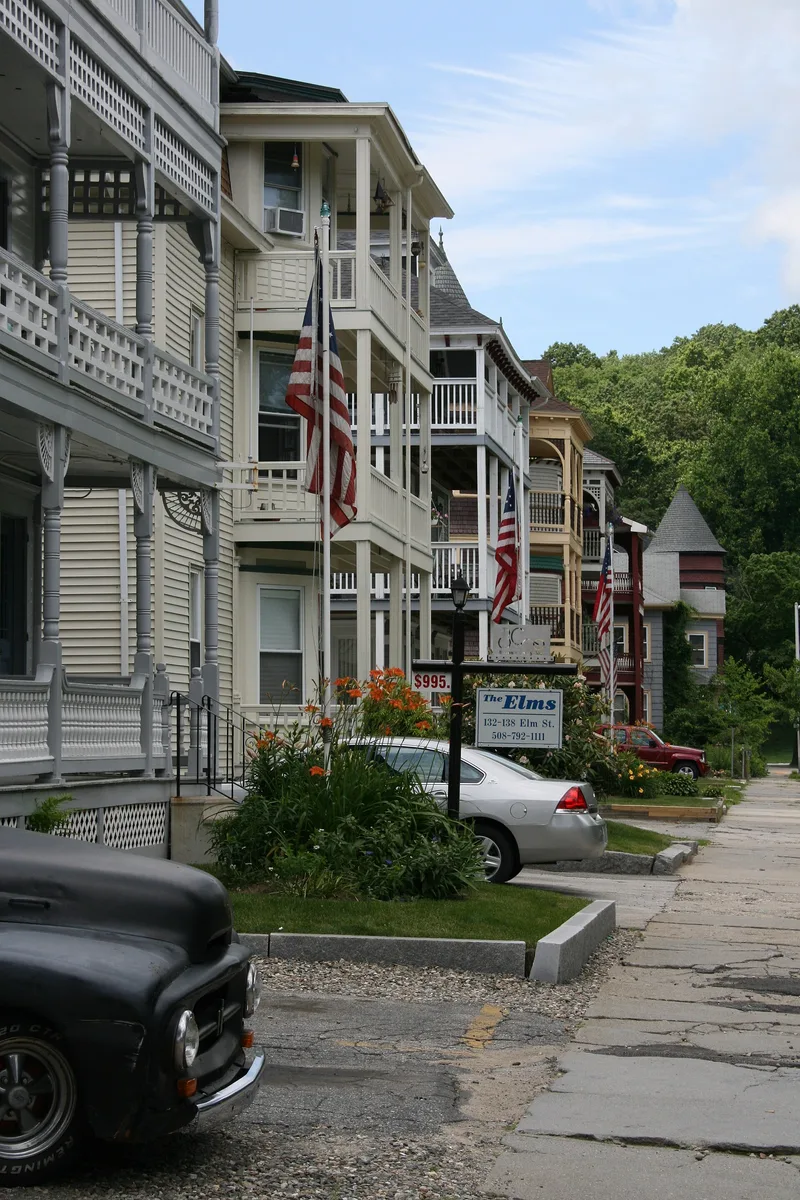
Elm Street in Worcester holds a row of three-decker apartment houses facing Olmsted-designed Elm Park. Built between 1904 and 1906, the district covers 1.5 acres and includes eight contributing and nine noncontributing buildings, the latter mostly modern garages. Most of the houses are Queen Anne in style, with side-hall plans, hip roofs, irregular massing, textured surfaces and large multi-tier porches with lathe-turned posts. The house at 148 Elm Street mixes Queen Anne and Shingle elements, including a corner turret and gambrel roofs. Five of the nine houses were developed by Charles W. Bowker, a local merchant, as premium rental property. Their park-side location, close to the city's main high-style residential area, drew tenants such as teachers, clerks, managers, agents and a clergyman. The district was listed for its association with this status rental development and for the quality of its Queen Anne three-decker design.
Machine-generated summary. This summary was generated by a language model from the official nomination document and has not been reviewed line by line by an editor. It may contain errors. Check the source document before relying on any detail. Source: nomination document (PDF) · catalog entry. Generated October 2026 (model claude-sonnet-5-5, prompt v1.0-2026-10-29).
| Period of significance | 1904-1906 |
|---|---|
| Styles | Queen Anne (with 148 Elm Street a mix of Queen Anne and Shingle styles) |
| Areas of significance | Community Planning and Development, European, Architecture, Social History |
| Acreage | 1.5 |
| Boundary source | NPS cultural-resource GIS polygon |
| Full listing page | Elm Street Historic District (property record) |
What listing means for this property
This is a historic district. Buildings within its boundary are either contributing (they add to the district's significance) or non-contributing. Owners of contributing income-producing buildings can claim the 20% federal rehabilitation tax credit; homeowners should look at state credits. National Register districts impose no design review by themselves; a local historic district ordinance, if one exists, does (the difference explained).
General information, not legal or tax advice. Rules change; confirm with your State Historic Preservation Office or a qualified adviser.