Elm Street Historic District

Why it's listed
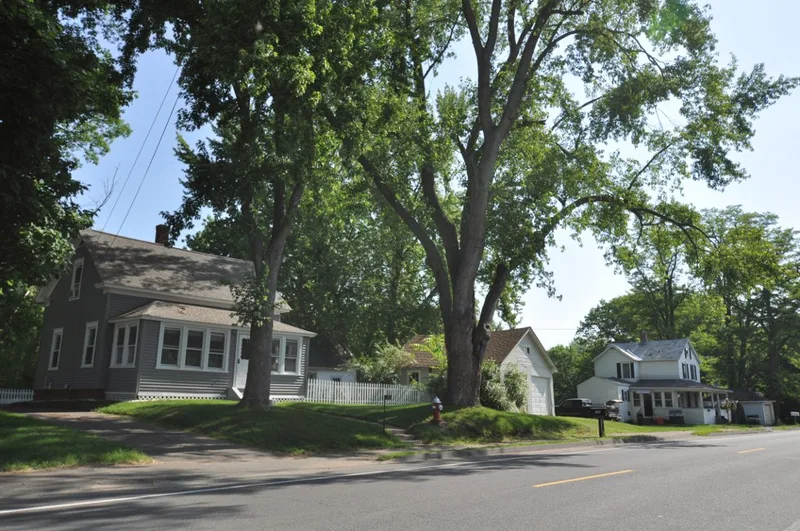
Elm Street runs through Hatfield on higher ground between the Mill River and the Connecticut River, with open fields stretching south to the water. The historic district around it holds 267 contributing resources, including houses, barns and other farm buildings built from the mid-18th century onward. Three Georgian houses, among them the ca. 1768 Elisha Hubbard Tavern, anchor the earliest period, followed by Federal houses with delicate Adamesque door surrounds and by Greek Revival farmhouses turned to face their side yards. In the mid-19th century the street changed. Tenement houses and small cottages were built for Irish and French Canadian immigrants and for farm laborers, alongside broom shops and tobacco barns. African American families also lived here. One house, at 27 Elm Street, uses an unusually early plank-frame technique. Together these buildings and fields record the working life of a New England farming neighborhood over more than two centuries.
Machine-generated summary. This summary was generated by a language model from the official nomination document and has not been reviewed line by line by an editor. It may contain errors. Check the source document before relying on any detail. Source: nomination document (PDF) · catalog entry. Generated October 2026 (model claude-sonnet-5-5, prompt v1.0-2026-10-29).
| Styles | Colonial/Georgian; Early Republic/Federal; Mid 19th Century/Greek Revival; Late 19th-Early 20th Century/bungalow; no style |
|---|---|
| Areas of significance | Agriculture, Architecture |
| Acreage | 561 |
| Boundary source | NPS cultural-resource GIS polygon |
| Full listing page | Elm Street Historic District (property record) |
What listing means for this property
This is a historic district. Buildings within its boundary are either contributing (they add to the district's significance) or non-contributing. Owners of contributing income-producing buildings can claim the 20% federal rehabilitation tax credit; homeowners should look at state credits. National Register districts impose no design review by themselves; a local historic district ordinance, if one exists, does (the difference explained).
General information, not legal or tax advice. Rules change; confirm with your State Historic Preservation Office or a qualified adviser.