Elm-Maple-South Streets Historic District

Why it's listed
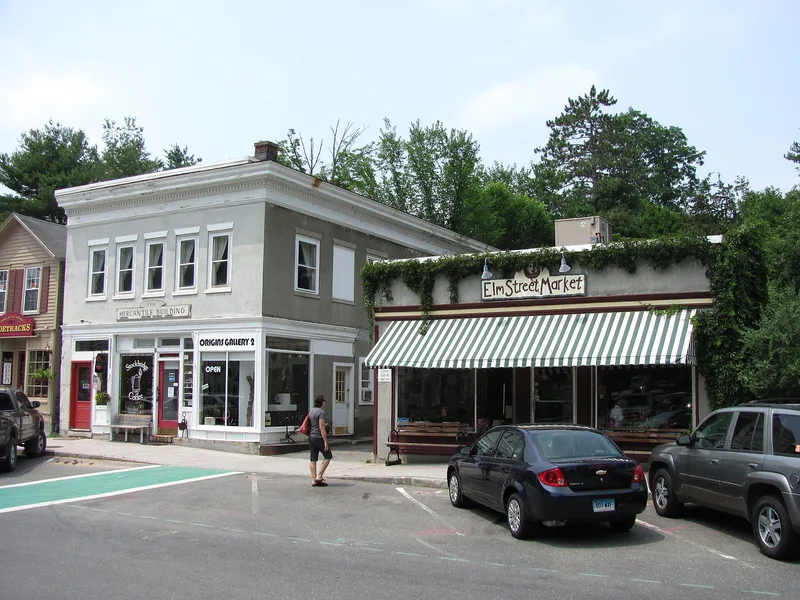
Elm, Maple and South Streets form the southern edge of Stockbridge's central village, on a terrace above the Housatonic River. The district holds modest houses, shops, a church, a former fire station, a stone railroad depot and two public parks. Most buildings date from the mid-19th to early 20th century, with a few earlier Federal houses. The smaller scale reflects the artisans who lived here and the Irish immigrant families who settled after the mid-19th century. Elm Street remained the commercial center for year-round residents, while Main Street served visitors. Notable buildings include St. Joseph's Catholic Church, finished in 1862, the Queen Anne Hose House of 1898-99, and the 1783 Tidmarsh house, later the home of Timothy Edwards and, from 1957 to 1978, of artist Norman Rockwell. Station Park (1884) and Recreation Park (1903) were created by the Laurel Hill Association. Fifty-two resources contribute to the district, dating from 1783 to 1971.
Machine-generated summary. This summary was generated by a language model from the official nomination document and has not been reviewed line by line by an editor. It may contain errors. Check the source document before relying on any detail. Source: nomination document (PDF) · catalog entry. Generated October 2026 (model claude-sonnet-5-5, prompt v1.0-2026-10-29).
| Styles | Federal, Greek Revival, Italianate, Queen Anne, Romanesque, Colonial Revival, Tudor Revival |
|---|---|
| Areas of significance | Art, Architecture, Commerce, Community Planning and Development, Transportation |
| Acreage | 25.1 |
| Boundary source | NPS cultural-resource GIS polygon |
| Full listing page | Elm-Maple-South Streets Historic District (property record) |
What listing means for this property
This is a historic district. Buildings within its boundary are either contributing (they add to the district's significance) or non-contributing. Owners of contributing income-producing buildings can claim the 20% federal rehabilitation tax credit; homeowners should look at state credits. National Register districts impose no design review by themselves; a local historic district ordinance, if one exists, does (the difference explained).
General information, not legal or tax advice. Rules change; confirm with your State Historic Preservation Office or a qualified adviser.