Elm Hill Farm Historic District

Why it's listed
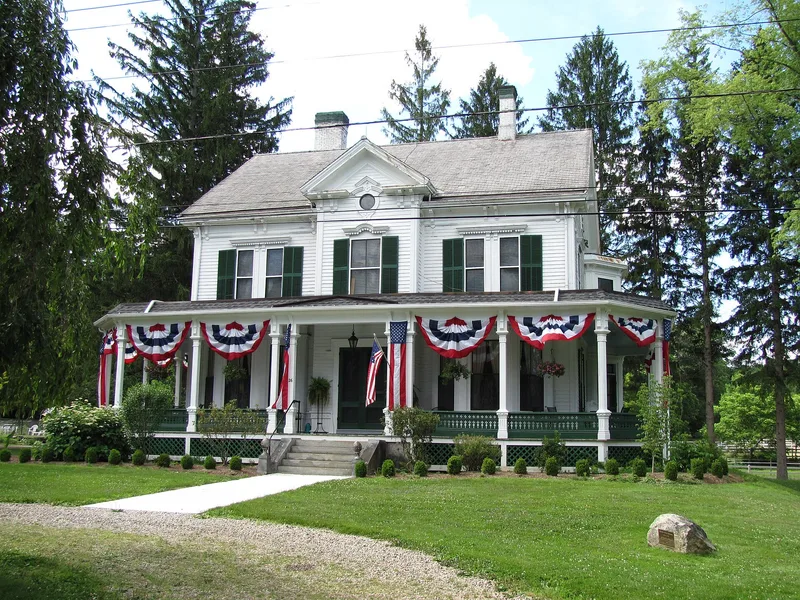
Along East Main Street, once the Old Boston Post Road, a cluster of houses, barns and stone walls makes up the historic core of the Blanchard family farm in Brookfield, Massachusetts. The 27.6-acre district includes eight residences and a range of outbuildings dating from about 1770 to about 1900. The Blanchards came to Brookfield around 1773, and by the 1870s their farm was the largest and wealthiest in town. Albert C. Blanchard, who made his fortune as a merchant and banker in Richmond, Indiana, returned and built the imposing 1870 Italianate house at the district's center. His son, the Reverend Charles P. Blanchard, added a small chapel and library. Earlier houses were updated in the mid-to-late 19th century, and modest tenant and farm manager houses sit alongside barns, a horse arena, a dowel fence and stone walls. The district was recognized for its architecture and its role in local agriculture, and it keeps much of its late 19th century appearance.
Machine-generated summary. This summary was generated by a language model from the official nomination document and has not been reviewed line by line by an editor. It may contain errors. Check the source document before relying on any detail. Source: nomination document (PDF) · catalog entry. Generated October 2026 (model claude-sonnet-5-5, prompt v1.0-2026-10-29).
| Period of significance | Ca. 1770-1940 |
|---|---|
| Styles | No Style; Early Republic/Federal; Late Victorian/Italianate, Queen Anne |
| Areas of significance | Architecture, Agriculture |
| Acreage | 27.6 |
| Boundary source | NPS cultural-resource GIS polygon |
| Full listing page | Elm Hill Farm Historic District (property record) |
What listing means for this property
This is a historic district. Buildings within its boundary are either contributing (they add to the district's significance) or non-contributing. Owners of contributing income-producing buildings can claim the 20% federal rehabilitation tax credit; homeowners should look at state credits. National Register districts impose no design review by themselves; a local historic district ordinance, if one exists, does (the difference explained).
General information, not legal or tax advice. Rules change; confirm with your State Historic Preservation Office or a qualified adviser.