Eaton, Crane & Pike Company Factory

The National Park Service has not published a boundary polygon for this district; the map shows the listed properties inside it and the district's reference point.
Why it's listed
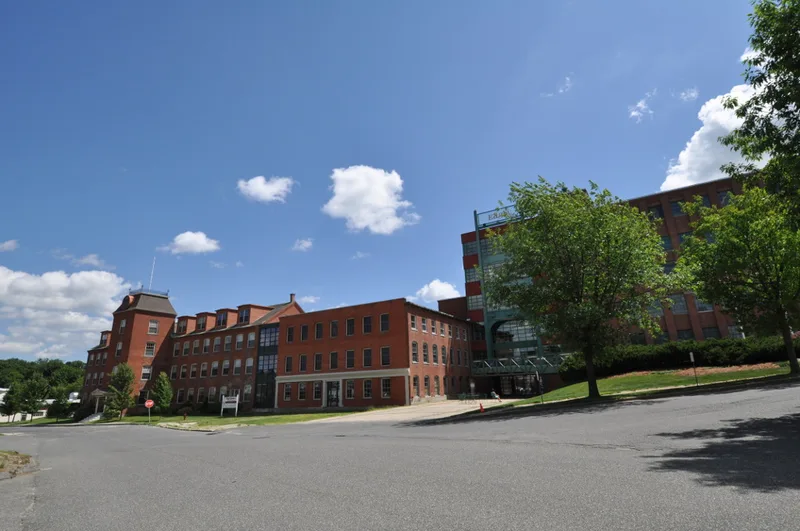
Rising beside the West Branch of the Housatonic River in Pittsfield, this factory complex grew from a clock-tower building of 1883 into a group of brick and wood-frame mills up to eight stories tall, with the last major addition in 1967. The first occupants included the Terry Clock Company and the Pittsfield Tack Company. In 1893 the property was bought for a stationery business led by Arthur W. Eaton, which expanded through several reorganizations, including the 1908 partnership with the Crane family that created the Eaton, Crane & Pike Company. By the 1920s it was reputed to be the largest American firm devoted solely to stationery, and in 1929 it employed about 1,500 people. The original building is valued as a Late Victorian factory with a mansard-roofed clock and stair tower, while the later buildings show how the plant adapted to changing paper-industry needs. Paper production continued until 1987, and conversion to commercial and light industrial space began in 1989.
Machine-generated summary. This summary was generated by a language model from the official nomination document and has not been reviewed line by line by an editor. It may contain errors. Check the source document before relying on any detail. Source: nomination document (PDF) · catalog entry. Generated October 2026 (model claude-sonnet-5-5, prompt v1.0-2026-10-29).
| Period of significance | 1883-1939 |
|---|---|
| Styles | Late Victorian |
| Areas of significance | Industry, Architecture |
| Acreage | 6.7 |
| Boundary source | not published |
| Full listing page | Eaton, Crane & Pike Company Factory (property record) |
What listing means for this property
This is a historic district. Buildings within its boundary are either contributing (they add to the district's significance) or non-contributing. Owners of contributing income-producing buildings can claim the 20% federal rehabilitation tax credit; homeowners should look at state credits. National Register districts impose no design review by themselves; a local historic district ordinance, if one exists, does (the difference explained).
General information, not legal or tax advice. Rules change; confirm with your State Historic Preservation Office or a qualified adviser.