East Hawley Center Historic District

Why it's listed
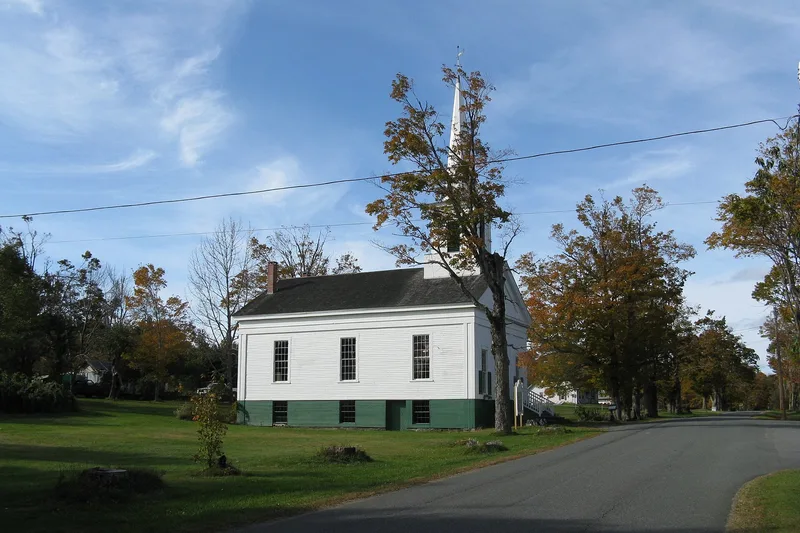
East Hawley Center is a small crossroads village on a flat plateau in the Berkshire Hills town of Hawley, Massachusetts. Roads radiate from a tree-shaded common toward Charlemont, Plainfield, Ashfield and Buckland. The district covers 23 acres and holds seven contributing buildings, a cemetery, a stone charcoal kiln and seven stone wall segments, mostly modest wood-frame structures dating from about 1810 to 1930. Luther Longley's farmhouse, built about 1810, is the oldest. The Longley family ran the tavern, store and post office, and by 1850 East Hawley was the leading stagecoach stop in town. A Greek Revival church and parsonage followed in the mid-1800s, along with a cemetery and blacksmith's house. William O. Bassett built an Italianate farmhouse in 1872 and a charcoal kiln in 1870. Open fields, stone walls and maple-lined roads preserve the rural setting, while newer camp buildings and a firehouse are counted as noncontributing.
Machine-generated summary. This summary was generated by a language model from the official nomination document and has not been reviewed line by line by an editor. It may contain errors. Check the source document before relying on any detail. Source: nomination document (PDF) · catalog entry. Generated October 2026 (model claude-sonnet-5-5, prompt v1.0-2026-10-29).
| Period of significance | ca. 1810-1930 |
|---|---|
| Styles | Early Republic: Federal; Mid 19th Century: Greek Revival; Late 19th and 20th Century Revivals: Italianate; no style |
| Areas of significance | Commerce, Agriculture, Transportation, Exploration/Settlement, Architecture |
| Acreage | 23 |
| Boundary source | NPS cultural-resource GIS polygon |
| Full listing page | East Hawley Center Historic District (property record) |
What listing means for this property
This is a historic district. Buildings within its boundary are either contributing (they add to the district's significance) or non-contributing. Owners of contributing income-producing buildings can claim the 20% federal rehabilitation tax credit; homeowners should look at state credits. National Register districts impose no design review by themselves; a local historic district ordinance, if one exists, does (the difference explained).
General information, not legal or tax advice. Rules change; confirm with your State Historic Preservation Office or a qualified adviser.