East Bridgewater Common Historic District

Why it's listed
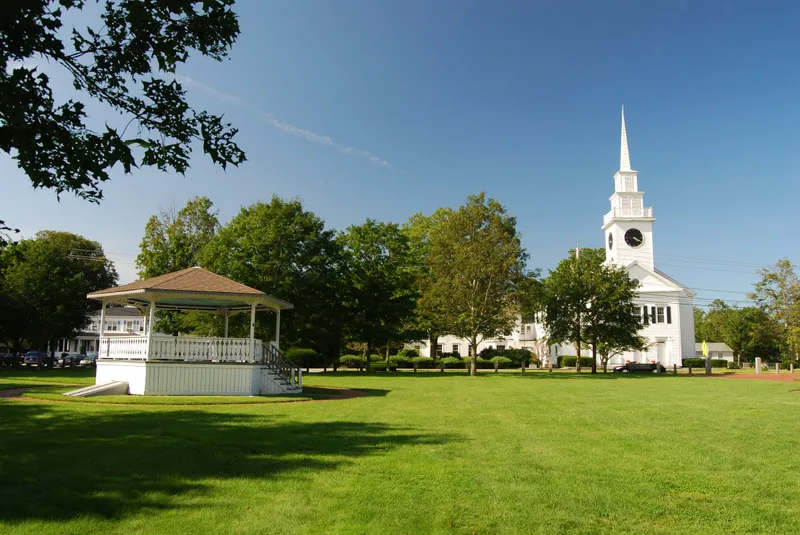
Centered on a 1.7-acre triangular town common, this East Bridgewater district gathers churches, civic buildings, cemeteries and homes along Central and Plymouth Streets and Morse Avenue. Its 69 resources, of which 47 contribute, date from 1703 to 1989. The focal point is the First Parish Church, built in 1794 and remodeled in the 1850s, whose tall spire is visible throughout the district. Around it stand Georgian, Federal, Greek Revival, Italianate, Stick Style and Bungalow houses, including the grand 1854 Aaron Hobart Estate, now town offices. The Common holds an 1874 granite Civil War monument, and the Old Graveyard dates to 1703. Old granite walls and barns reinforce the setting. Artist Francis Davis Millet's studio and a former tuberculosis sanatorium also lie within it. The district was listed for its cohesive collection of restrained but finely crafted houses arranged around the Common, and it was the town's first National Register district.
Machine-generated summary. This summary was generated by a language model from the official nomination document and has not been reviewed line by line by an editor. It may contain errors. Check the source document before relying on any detail. Source: nomination document (PDF) · catalog entry. Generated October 2026 (model claude-sonnet-5-5, prompt v1.0-2026-10-29).
| Styles | Colonial/Georgian, Early Republic/Federal, Mid 19th Century/Greek Revival, Late Victorian/Italianate and Stick |
|---|---|
| Areas of significance | Architecture, Community Planning and Development, Religion |
| Acreage | 69 |
| Boundary source | NPS cultural-resource GIS polygon |
| Full listing page | East Bridgewater Common Historic District (property record) |
What listing means for this property
This is a historic district. Buildings within its boundary are either contributing (they add to the district's significance) or non-contributing. Owners of contributing income-producing buildings can claim the 20% federal rehabilitation tax credit; homeowners should look at state credits. National Register districts impose no design review by themselves; a local historic district ordinance, if one exists, does (the difference explained).
General information, not legal or tax advice. Rules change; confirm with your State Historic Preservation Office or a qualified adviser.