East Blackstone Village Historic District

Why it's listed
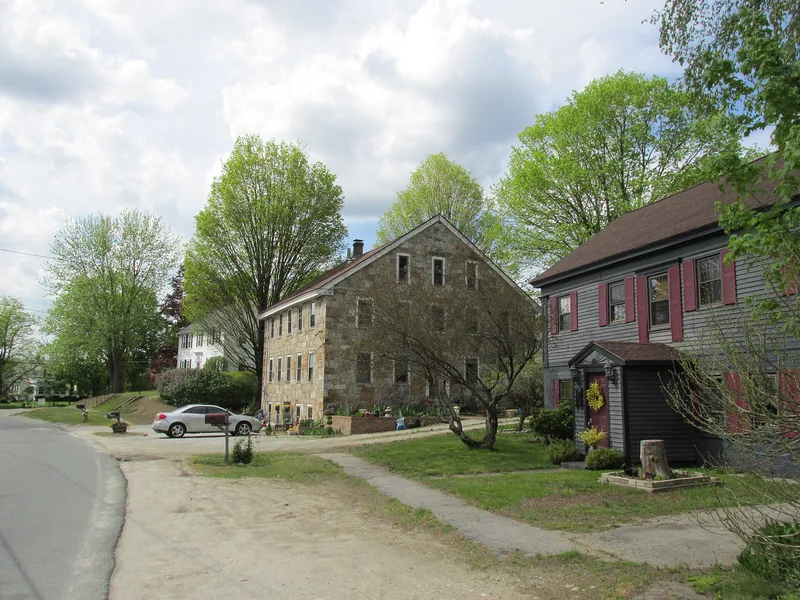
East Blackstone Village is a small historic district in Blackstone, Massachusetts, strung along Elm Street and around its junction with Summer Street. It grew along the early road linking Providence and Worcester. The district covers about 33 acres and includes fourteen houses, two barns, a former store, a former schoolhouse, a stone arch bridge and several mill sites. The oldest building is the Seth Kelly Sr. House, built about 1760. Other landmarks include the three-story Stone Store of about 1800, the brick schoolhouse of about 1830 and a series of Greek Revival cottages, some built by the Ray brothers. Italianate and Queen Anne houses show later growth. Ruins of grist, saw and cotton mills, a forge site from 1716 and dams along the Mill River recall the industries that supported the village. The Kelly family shaped much of this development. Together, the buildings and landscape show how a nineteenth-century self-sufficient village was arranged and how it worked.
Machine-generated summary. This summary was generated by a language model from the official nomination document and has not been reviewed line by line by an editor. It may contain errors. Check the source document before relying on any detail. Source: nomination document (PDF) · catalog entry. Generated October 2026 (model claude-sonnet-5-5, prompt v1.0-2026-10-29).
| Styles | Georgian, Federal, Greek Revival, Italianate, Queen Anne, Bungalow, Cape |
|---|---|
| Areas of significance | Historic - Non-Aboriginal, Architecture, Community Planning and Development |
| Acreage | 33 |
| Boundary source | NPS cultural-resource GIS polygon |
| Full listing page | East Blackstone Village Historic District (property record) |
What listing means for this property
This is a historic district. Buildings within its boundary are either contributing (they add to the district's significance) or non-contributing. Owners of contributing income-producing buildings can claim the 20% federal rehabilitation tax credit; homeowners should look at state credits. National Register districts impose no design review by themselves; a local historic district ordinance, if one exists, does (the difference explained).
General information, not legal or tax advice. Rules change; confirm with your State Historic Preservation Office or a qualified adviser.