Dorchester-Milton Lower Mills Industrial District (Boundary Increase)

Why it's listed
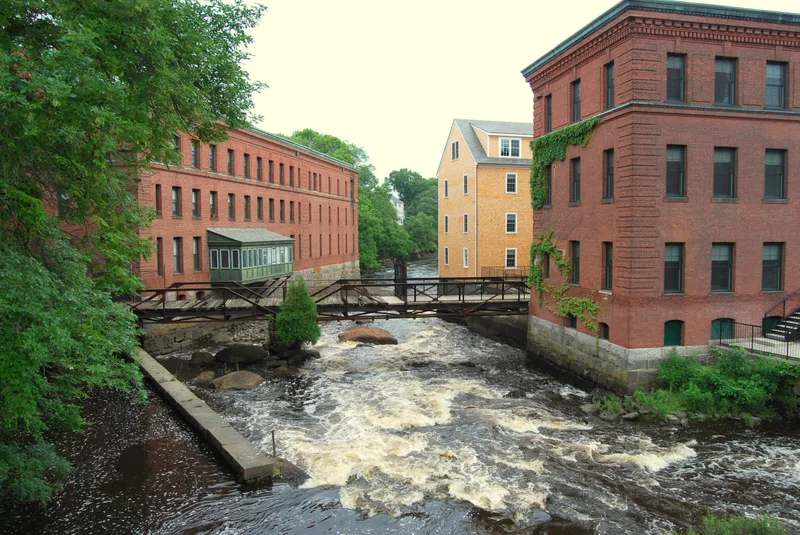
Along the Neponset River at Pierce Square, the Lower Mills Industrial District spans Dorchester in Boston and the town of Milton. It holds 16 industrial buildings, nearly all built for Walter Baker & Co., the chocolate maker, plus the Mason Regulator Co. building. This amendment adds the Baker Warehouse at 4 River Street, completed in 1947 as the last major building of the Baker complex. It is a large L-shaped brick and concrete structure with a flat roof, few windows, brick quoins and paired piers on the north facade, and a 1958 brick addition along River Street. Its rear once carried a conveyor bridge linking it to the manufacturing plant. The warehouse is tied to the company's growth under Henry L. Pierce, the later corporate period, and ownership by General Foods from 1927. Because it fits the district's architectural and historical character and retains its integrity, the district's boundaries and period of significance were extended to include it.
Machine-generated summary. This summary was generated by a language model from the official nomination document and has not been reviewed line by line by an editor. It may contain errors. Check the source document before relying on any detail. Source: nomination document (PDF) · catalog entry. Generated October 2026 (model claude-sonnet-5-5, prompt v1.0-2026-10-29).
| Period of significance | 1867-1951 |
|---|---|
| Styles | Queen Anne, Romanesque Revival, Second Empire, Georgian Revival, Tapestry Brick and Modern (district); the warehouse has minimal classical ornamentation |
| Areas of significance | Architecture, Commerce |
| Acreage | 5 |
| Boundary source | NPS cultural-resource GIS polygon |
| Full listing page | Dorchester-Milton Lower Mills Industrial District (Boundary Increase) (property record) |
What listing means for this property
This is a historic district. Buildings within its boundary are either contributing (they add to the district's significance) or non-contributing. Owners of contributing income-producing buildings can claim the 20% federal rehabilitation tax credit; homeowners should look at state credits. National Register districts impose no design review by themselves; a local historic district ordinance, if one exists, does (the difference explained).
General information, not legal or tax advice. Rules change; confirm with your State Historic Preservation Office or a qualified adviser.