Derby Waterfront District

Why it's listed
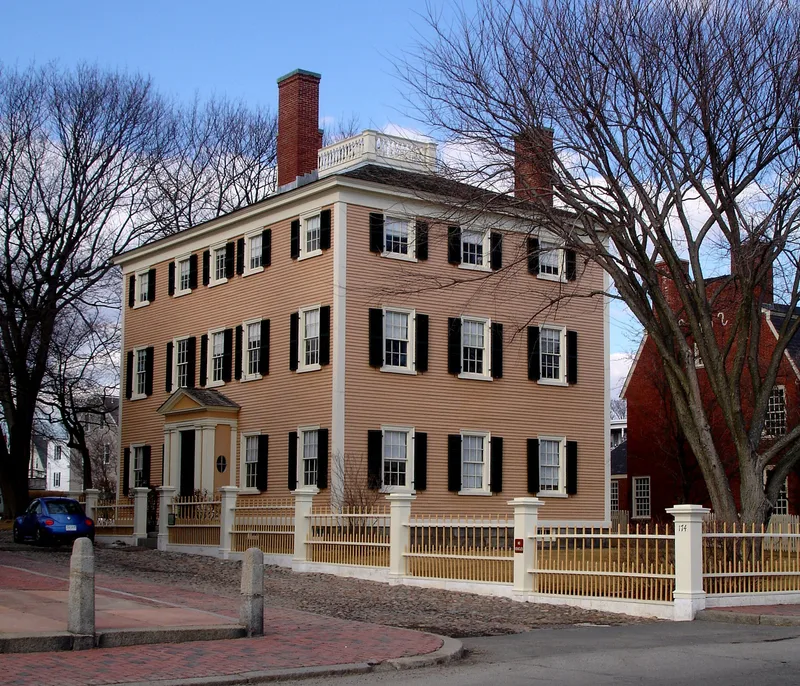
Salem's Derby Waterfront District is a densely built 25-acre area along Derby Street and the streets leading toward the harbor. Federal-period buildings predominate, mixed with some from the eighteenth, late nineteenth and early twentieth centuries and three from the seventeenth. Most are clapboard, with several fine brick examples. Derby Wharf was begun in 1762, and the area flourished from about the Revolution to the 1820s, when Salem's trade declined because the harbor was too shallow for clipper ships. Merchants and gentry lived on the north side of Derby Street, while counting rooms, warehouses, sailmakers' lofts and wharves lay opposite. Notable buildings include the Simon Forrester House, designed by Samuel McIntire in 1791, the brick Benjamin Crowninshield House of 1810, the Custom House of 1819, and the Derby House of 1761. The district also contains the Salem Maritime National Historic Site and the House of Seven Gables complex. It is listed as the center of Salem's maritime activity and a well-preserved reminder of its seaport past.
Machine-generated summary. This summary was generated by a language model from the official nomination document and has not been reviewed line by line by an editor. It may contain errors. Check the source document before relying on any detail. Source: nomination document (PDF) · catalog entry. Generated October 2026 (model claude-sonnet-5-5, prompt v1.0-2026-10-29).
| Styles | Federal (predominant), with some Greek Revival and earlier buildings |
|---|---|
| Areas of significance | Commerce, Architecture |
| Acreage | 25 |
| Boundary source | NPS cultural-resource GIS polygon |
| Full listing page | Derby Waterfront District (property record) |
What listing means for this property
This is a historic district. Buildings within its boundary are either contributing (they add to the district's significance) or non-contributing. Owners of contributing income-producing buildings can claim the 20% federal rehabilitation tax credit; homeowners should look at state credits. National Register districts impose no design review by themselves; a local historic district ordinance, if one exists, does (the difference explained).
General information, not legal or tax advice. Rules change; confirm with your State Historic Preservation Office or a qualified adviser.