Deerfield Valley Agricultural Society Fairgrounds

Why it's listed
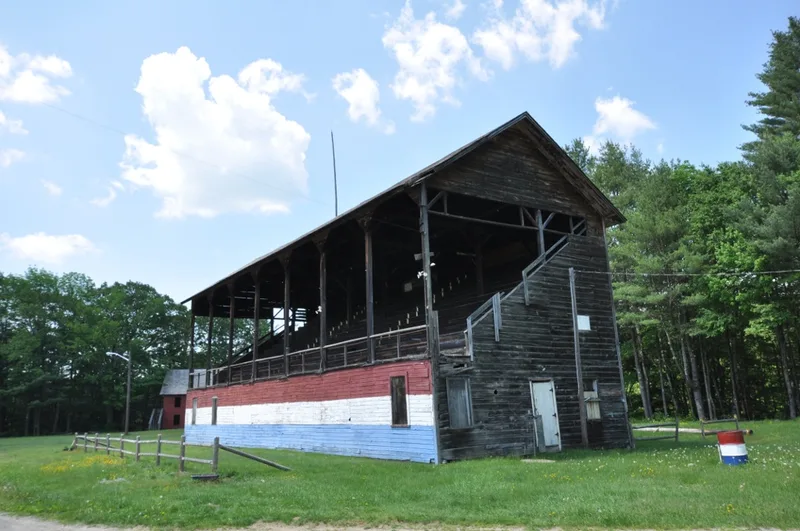
Set on a plateau above the hill town of Charlemont, these 24 acres once hosted the annual fair of the Deerfield Valley Agricultural Society. The grounds keep three defining features from the fair era: a half-mile dirt racetrack, a two-story exhibition building from about 1889, and a slate-roofed grandstand from 1892. Open space inside and outside the oval was used for temporary tents, corrals, concessions and parking at fair time. The society formed in 1870 because farmers in remote upland towns found it too costly and difficult to move livestock to the county fair in Greenfield. The fair ran from 1871 until 1934, after which the land sat unused, passed to a private owner, and was later conveyed to the town. Today it is a public park. Newer additions, including a demolition derby area, a draw pit, an information booth and a picnic pavilion, are considered noncontributing. The exhibition building and grandstand are described as exceptionally rare survivors in Massachusetts.
Machine-generated summary. This summary was generated by a language model from the official nomination document and has not been reviewed line by line by an editor. It may contain errors. Check the source document before relying on any detail. Source: nomination document (PDF) · catalog entry. Generated October 2026 (model claude-sonnet-5-5, prompt v1.0-2026-10-29).
| Period of significance | 1871 - 1934 |
|---|---|
| Styles | No style |
| Areas of significance | Agriculture, Architecture, Entertainment/Recreation |
| Acreage | 24 |
| Boundary source | NPS cultural-resource GIS polygon |
| Full listing page | Deerfield Valley Agricultural Society Fairgrounds (property record) |
What listing means for this property
This is a historic district. Buildings within its boundary are either contributing (they add to the district's significance) or non-contributing. Owners of contributing income-producing buildings can claim the 20% federal rehabilitation tax credit; homeowners should look at state credits. National Register districts impose no design review by themselves; a local historic district ordinance, if one exists, does (the difference explained).
General information, not legal or tax advice. Rules change; confirm with your State Historic Preservation Office or a qualified adviser.