Dean Junior College Historic District

Why it's listed
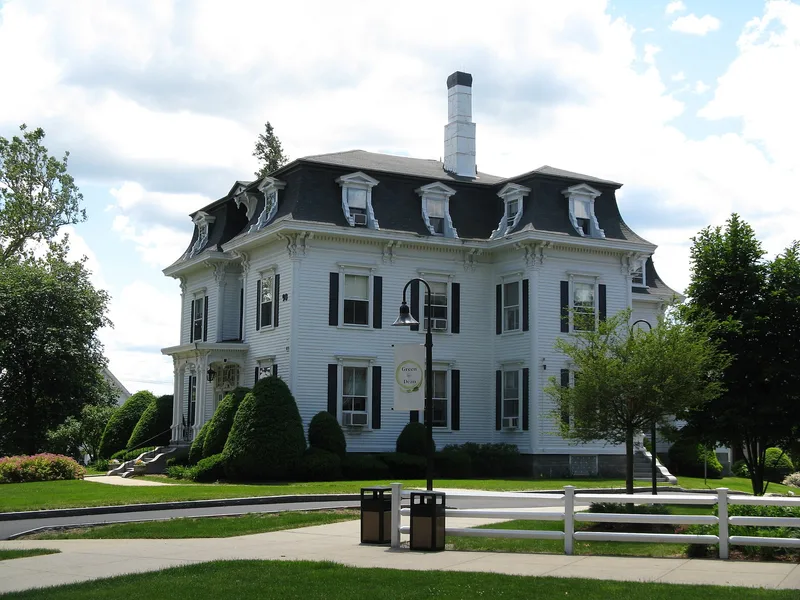
Along Main Street in Franklin, Massachusetts, a group of ten buildings forms a well-preserved Victorian enclave of about seven acres. Houses, a library, a funeral home and college buildings share similar massing and setbacks, softened by shade trees, lawns and brick and iron fences. Styles range from the Chateauesque Dean Administration Building of 1870 to a Queen Anne house with a circular tower, a Stick style house, the neoclassic Ray Memorial Library of 1904 in Milford marble, and two Ray family houses of 1870, one later remodeled in Italian Renaissance Revival manner. The district matters for its architecture and for its links to the Ray family, Franklin's most important philanthropists, who gave the science building and the library. Dean Academy was founded here as a coeducational Universalist preparatory school funded by a bequest from Dr. Oliver Dean. Other buildings were built for local straw and piano manufacturers. Two modern college buildings are the main intrusions in an otherwise little-altered setting.
Machine-generated summary. This summary was generated by a language model from the official nomination document and has not been reviewed line by line by an editor. It may contain errors. Check the source document before relying on any detail. Source: nomination document (PDF) · catalog entry. Generated October 2026 (model claude-sonnet-5-5, prompt v1.0-2026-10-29).
| Styles | High Victorian styles, including Chateauesque, Queen Anne, Stick, Romanesque, Neoclassic and Italian Renaissance Revival |
|---|---|
| Areas of significance | Education, Architecture, Social History |
| Acreage | 7 |
| Boundary source | NPS cultural-resource GIS polygon |
| Full listing page | Dean Junior College Historic District (property record) |
What listing means for this property
This is a historic district. Buildings within its boundary are either contributing (they add to the district's significance) or non-contributing. Owners of contributing income-producing buildings can claim the 20% federal rehabilitation tax credit; homeowners should look at state credits. National Register districts impose no design review by themselves; a local historic district ordinance, if one exists, does (the difference explained).
General information, not legal or tax advice. Rules change; confirm with your State Historic Preservation Office or a qualified adviser.