Daniel Chester French Home and Studio, "Chesterwood"

Why it's listed
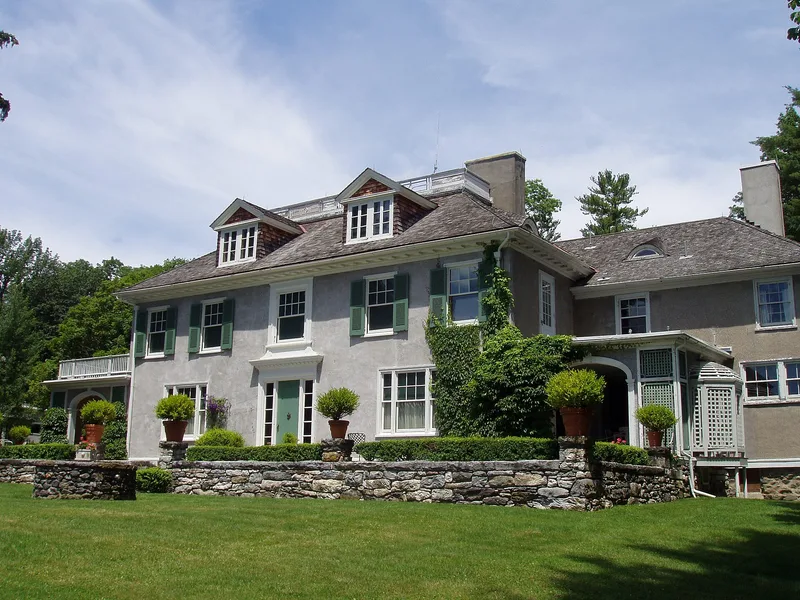
Chesterwood, on Williamsville Road about two miles west of Stockbridge, Massachusetts, was the summer studio and home of sculptor Daniel Chester French. He bought the 150-acre Marshall Warner farm in 1896, and 129.02 acres remain. Architect Henry Bacon designed the stucco studio, built in 1897, and the 2½-story Georgian Revival residence that replaced the old farmhouse in 1901. The studio has a 30-foot cube workroom, 30-foot-high double doors built for an equestrian statue of George Washington, and a modeling table on a short railroad track so French could view work in natural light. A converted barn serves as an exhibition gallery, and a caretaker's house and a smaller second studio stand south of the road. French created the Minute Man in Concord and the seated Lincoln for the Lincoln Memorial. The studio and gallery hold sketches, plaster casts and bronze models described as the most complete collection of his work. The site was designated a National Historic Landmark for its association with American sculpture.
Machine-generated summary. This summary was generated by a language model from the official nomination document and has not been reviewed line by line by an editor. It may contain errors. Check the source document before relying on any detail. Source: nomination document (PDF) · catalog entry. Generated October 2026 (model claude-sonnet-5-5, prompt v1.0-2026-10-29).
| Period of significance | 1896-1931 |
|---|---|
| Styles | Georgian Revival (residence) |
| Areas of significance | Art |
| Acreage | 129 |
| Boundary source | NPS cultural-resource GIS polygon |
| Full listing page | Daniel Chester French Home and Studio, "Chesterwood" (property record) |
What listing means for this property
This is a historic district. Buildings within its boundary are either contributing (they add to the district's significance) or non-contributing. Owners of contributing income-producing buildings can claim the 20% federal rehabilitation tax credit; homeowners should look at state credits. National Register districts impose no design review by themselves; a local historic district ordinance, if one exists, does (the difference explained).
General information, not legal or tax advice. Rules change; confirm with your State Historic Preservation Office or a qualified adviser.