Common Historic District

Why it's listed
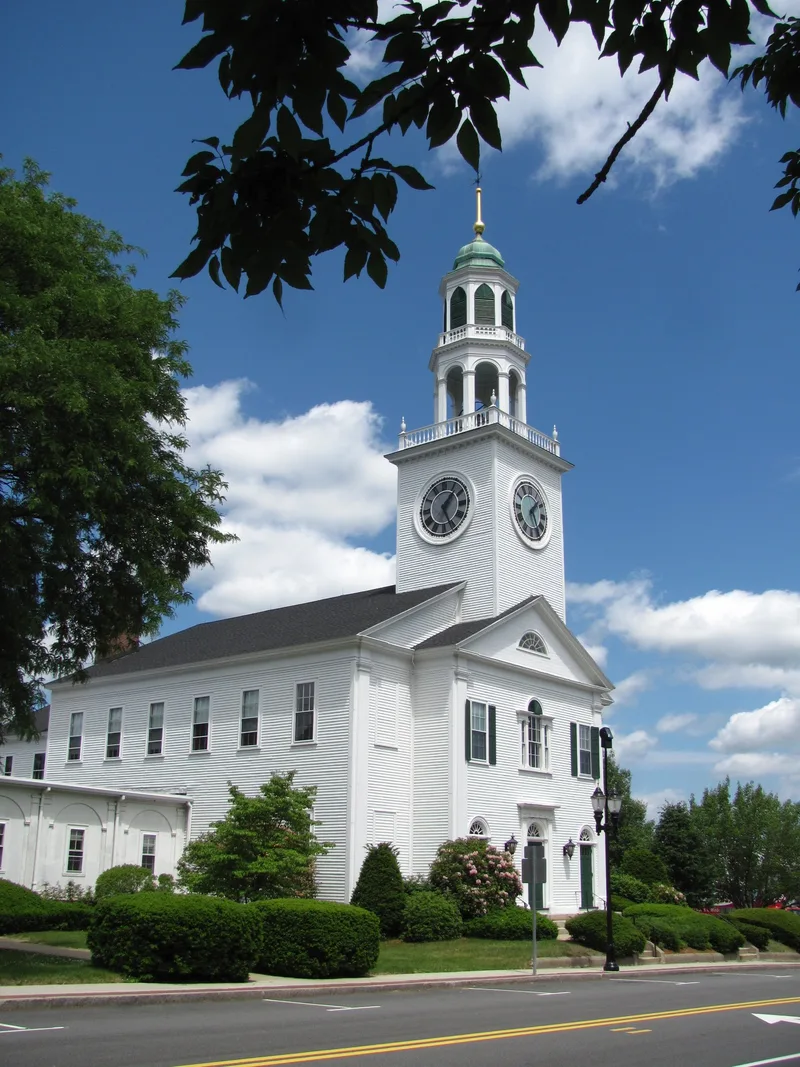
Reading's Common and the streets around it form an inverted triangle of about 30 acres, cut by Main Street (Route 28). The Common was held communally by 1737, and a burial ground lay to its north. A meetinghouse was built nearby in 1769, and a Federal-style church followed in 1817. That church burned in 1911 and was rebuilt in 1913 as a replica, using measured drawings by architect Winthrop Parker. Over time the area gathered schools, churches, stores and houses. Commercial activity grew after the Boston and Andover Turnpike opened in 1806. In the early 20th century the high school (1906), Town Hall and Public Library (both 1917-18), the First Congregational Church (1911) and the Christian Science church (1913-14) were added, all in historical styles. Greek Revival and other 19th-century houses line the edges, and Laurel Hill Cemetery, dating from 1737, marks the northern boundary. The district was listed for its role as the town's civic and institutional heart and for the quality of its architecture.
Machine-generated summary. This summary was generated by a language model from the official nomination document and has not been reviewed line by line by an editor. It may contain errors. Check the source document before relying on any detail. Source: nomination document (PDF) · catalog entry. Generated October 2026 (model claude-sonnet-5-5, prompt v1.0-2026-10-29).
| Period of significance | 1800-1920 |
|---|---|
| Styles | Federal, Greek Revival, Gothic Revival, Georgian Revival and Craftsman |
| Areas of significance | Commerce, Politics/Government, Architecture |
| Acreage | 30 |
| Boundary source | NPS cultural-resource GIS polygon |
| Full listing page | Common Historic District (property record) |
What listing means for this property
This is a historic district. Buildings within its boundary are either contributing (they add to the district's significance) or non-contributing. Owners of contributing income-producing buildings can claim the 20% federal rehabilitation tax credit; homeowners should look at state credits. National Register districts impose no design review by themselves; a local historic district ordinance, if one exists, does (the difference explained).
General information, not legal or tax advice. Rules change; confirm with your State Historic Preservation Office or a qualified adviser.