Church Street Historic District

Why it's listed
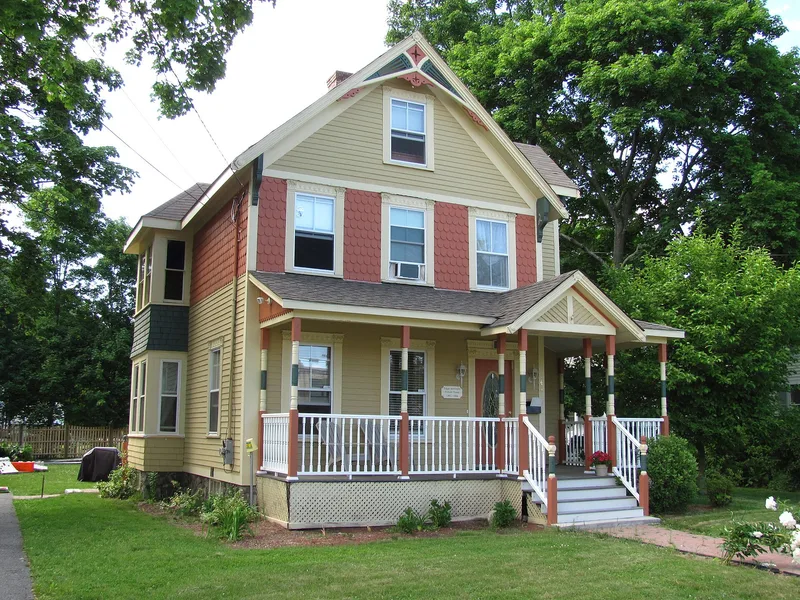
Church Street in Wilmington, Massachusetts, is lined with a group of about 40 buildings, mostly houses, built between roughly 1850 and 1924. The street was laid out between 1850 and 1856 to connect the town center with the Boston & Lowell rail depot, and it became a favored address for the town's growing non-farming middle class and several prominent citizens. Queen Anne houses dominate, ranging from simple front-gable types to large, exuberant designs with a tower, jerkin-head roof and Gothic-arched gables. Five houses were built on speculation by builders Howard M. Horton and Charles I. Freeman, and they read more like a middle-class development than workers' housing. Italianate, Colonial Revival, Craftsman and Dutch Colonial examples add variety. Houses sit well back on open lots with large street trees. The district is regarded as the finest collection of late 19th and early 20th century architecture in Wilmington, and it also has archaeological potential.
Machine-generated summary. This summary was generated by a language model from the official nomination document and has not been reviewed line by line by an editor. It may contain errors. Check the source document before relying on any detail. Source: nomination document (PDF) · catalog entry. Generated October 2026 (model claude-sonnet-5-5, prompt v1.0-2026-10-29).
| Period of significance | ca. 1850 - 1953 |
|---|---|
| Styles | Mid 19th Century: Italianate Villa; Late Victorian: Queen Anne |
| Areas of significance | Architecture, Community Planning and Development |
| Acreage | 10 |
| Boundary source | NPS cultural-resource GIS polygon |
| Full listing page | Church Street Historic District (property record) |
What listing means for this property
This is a historic district. Buildings within its boundary are either contributing (they add to the district's significance) or non-contributing. Owners of contributing income-producing buildings can claim the 20% federal rehabilitation tax credit; homeowners should look at state credits. National Register districts impose no design review by themselves; a local historic district ordinance, if one exists, does (the difference explained).
General information, not legal or tax advice. Rules change; confirm with your State Historic Preservation Office or a qualified adviser.