Chestnut Hill Historic Distric

Why it's listed
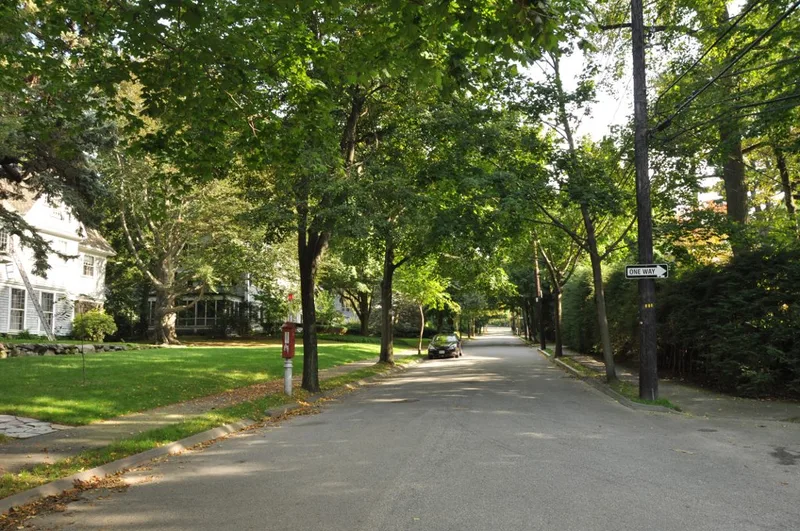
Chestnut Hill is a planned suburban neighborhood of about 70 acres in northeast Brookline, running to the Newton line. It contains roughly 126 houses, mostly single-family homes on lots of one-third acre to over two acres, built between 1886 and 1925. Shingle Style predominates, alongside Queen Anne, Medieval Revival and Colonial Revival houses, with Arts and Crafts influence in later streets. The area began when the heirs of Joseph Lee subdivided his farm in the 1850s and laid out streets for a community of relatives and friends. Beacon Street's extension and a railroad line made the hill accessible from Boston. Development quickened after 1890. Many houses were designed by established architects, including Chapman and Frazer, who produced at least 29 of the inventoried buildings. Others came from Andrews, Jaques and Rantoul and Putnam and Cox. The consistent scale, quality of design and stable use have kept the neighborhood's character intact. Reservoir Road follows part of John Eliot's old Path to Waban.
Machine-generated summary. This summary was generated by a language model from the official nomination document and has not been reviewed line by line by an editor. It may contain errors. Check the source document before relying on any detail. Source: nomination document (PDF) · catalog entry. Generated October 2026 (model claude-sonnet-5-5, prompt v1.0-2026-10-29).
| Period of significance | 1886-1925 |
|---|---|
| Styles | Queen Anne, Medieval Revival, Shingle, Colonial Revival, with Arts and Crafts influence |
| Areas of significance | Community Planning and Development, Architecture |
| Acreage | 70 |
| Boundary source | NPS cultural-resource GIS polygon |
| Full listing page | Chestnut Hill Historic Distric (property record) |
What listing means for this property
This is a historic district. Buildings within its boundary are either contributing (they add to the district's significance) or non-contributing. Owners of contributing income-producing buildings can claim the 20% federal rehabilitation tax credit; homeowners should look at state credits. National Register districts impose no design review by themselves; a local historic district ordinance, if one exists, does (the difference explained).
General information, not legal or tax advice. Rules change; confirm with your State Historic Preservation Office or a qualified adviser.