Chesterfield Center Historic District

The National Park Service has not published a boundary polygon for this district; the map shows the listed properties inside it and the district's reference point.
Why it's listed
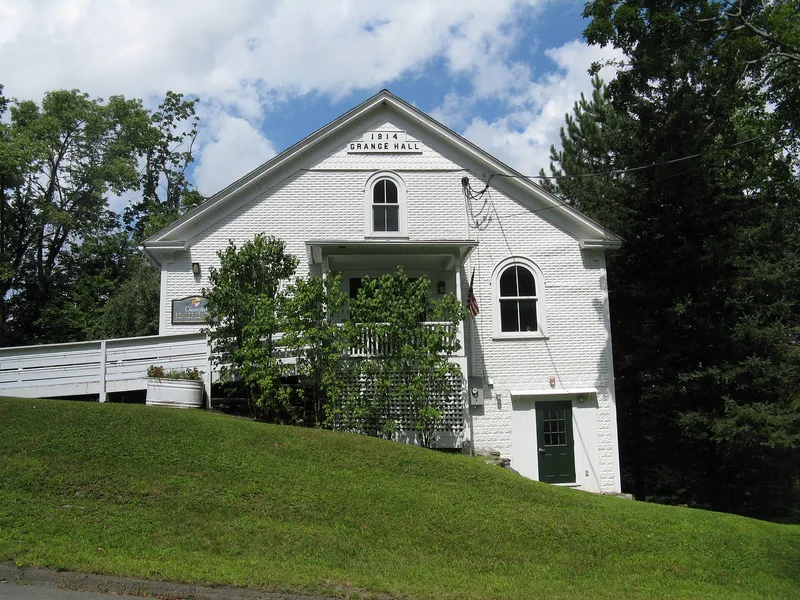
Chesterfield Center is the civic heart of a hill town in western Massachusetts, laid out along a crossroads of Main Road with North and South Streets. The district includes the First Congregational Church, the Methodist Church, the Grange Hall, town offices, a library, a museum, a post office and a general store, surrounded by houses with barns, carriage houses and other outbuildings. Its buildings trace the town's growth from a Georgian Cape of about 1775 through Federal houses such as the 1822 Starkweather House, with its reeded corner pilasters, to Greek Revival churches and homes of the 1830s to 1850s. Connected farm buildings show how households organized their farmyards. Prominent early residents, including a lawyer and the town's first physician, helped shape the civic focus of the center. The district contains 81 contributing resources, among them the Center Cemetery, and its significance period runs to 1958.
Machine-generated summary. This summary was generated by a language model from the official nomination document and has not been reviewed line by line by an editor. It may contain errors. Check the source document before relying on any detail. Source: nomination document (PDF) · catalog entry. Generated October 2026 (model claude-sonnet-5-5, prompt v1.0-2026-10-29).
| Period of significance | Ends in 1958 (start date not shown in the provided text) |
|---|---|
| Styles | Georgian, Federal, Greek Revival, Italian Villa, Gothic, Queen Anne, Colonial Revival |
| Areas of significance | Architecture, Community Planning and Development |
| Acreage | 273.6 |
| Boundary source | not published |
| Full listing page | Chesterfield Center Historic District (property record) |
What listing means for this property
This is a historic district. Buildings within its boundary are either contributing (they add to the district's significance) or non-contributing. Owners of contributing income-producing buildings can claim the 20% federal rehabilitation tax credit; homeowners should look at state credits. National Register districts impose no design review by themselves; a local historic district ordinance, if one exists, does (the difference explained).
General information, not legal or tax advice. Rules change; confirm with your State Historic Preservation Office or a qualified adviser.