Charter Street Historic District

The National Park Service has not published a boundary polygon for this district; the map shows the listed properties inside it and the district's reference point.
Why it's listed
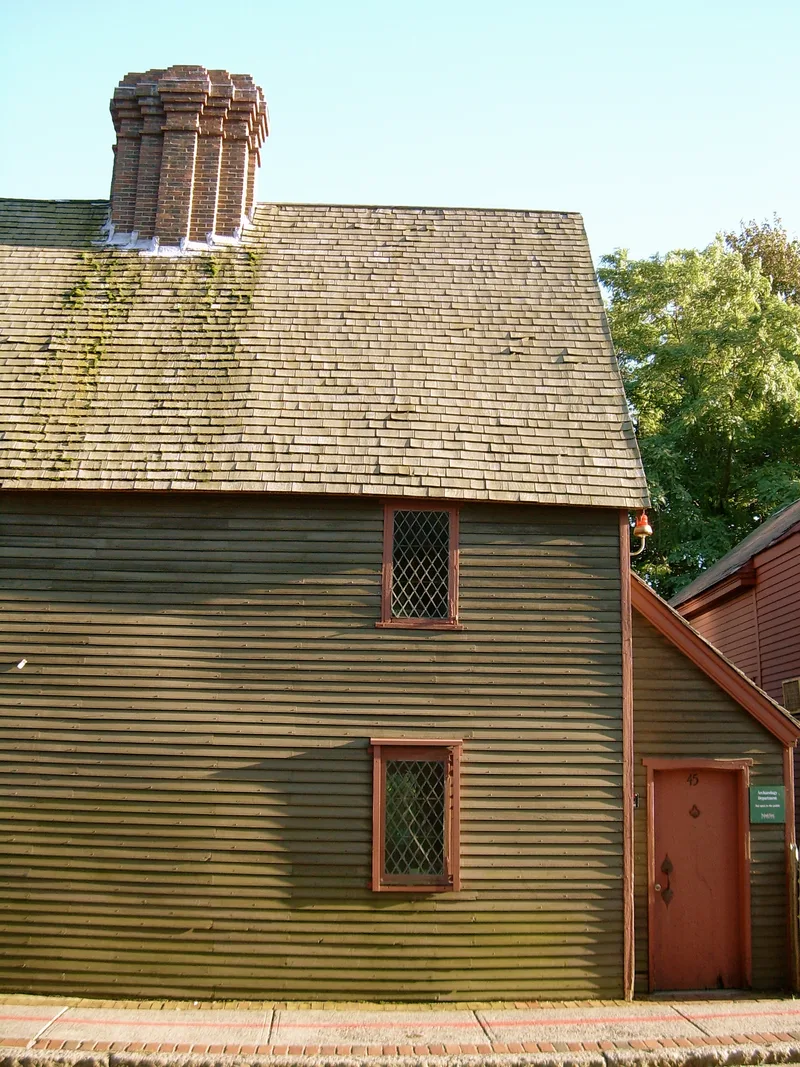
Three linked properties make up this small Salem district: the Grimshawe House, the Pickman House and the Charter Street Cemetery, also called the Burying Point. The cemetery, in use by 1637, is the oldest burying ground in Salem. It holds the grave of Captain Richard More, the only known gravestone of a Mayflower passenger, along with those of Governor Simon Bradstreet, the woodcarver Samuel McIntire and Judge Hathorne. The Grimshawe House, a three-story Federal building from about 1770, was home to the Peabody family from 1835 to 1841. Nathaniel Hawthorne courted Sophia Peabody there and later used the house and cemetery in his writing. The Pickman House at 20 Liberty Street dates to either c.1638 or c.1680, and its carved 17th century frame survives within a 1972-73 restoration. Both houses were altered over time, and the surrounding neighborhood has disappeared, but the group preserves the remaining physical traces of that area and its literary and early settlement associations.
Machine-generated summary. This summary was generated by a language model from the official nomination document and has not been reviewed line by line by an editor. It may contain errors. Check the source document before relying on any detail. Source: nomination document (PDF) · catalog entry. Generated October 2026 (model claude-sonnet-5-5, prompt v1.0-2026-10-29).
| Period of significance | 1600-1699, 1700-1799 (specific dates c.1637, c.1770) |
|---|---|
| Styles | Federal (Grimshawe House); early 17th century wooden house (Pickman House) |
| Areas of significance | Literature, Architecture |
| Acreage | 1 |
| Boundary source | not published |
| Full listing page | Charter Street Historic District (property record) |
What listing means for this property
This is a historic district. Buildings within its boundary are either contributing (they add to the district's significance) or non-contributing. Owners of contributing income-producing buildings can claim the 20% federal rehabilitation tax credit; homeowners should look at state credits. National Register districts impose no design review by themselves; a local historic district ordinance, if one exists, does (the difference explained).
General information, not legal or tax advice. Rules change; confirm with your State Historic Preservation Office or a qualified adviser.