Centre Village Historic District

Why it's listed
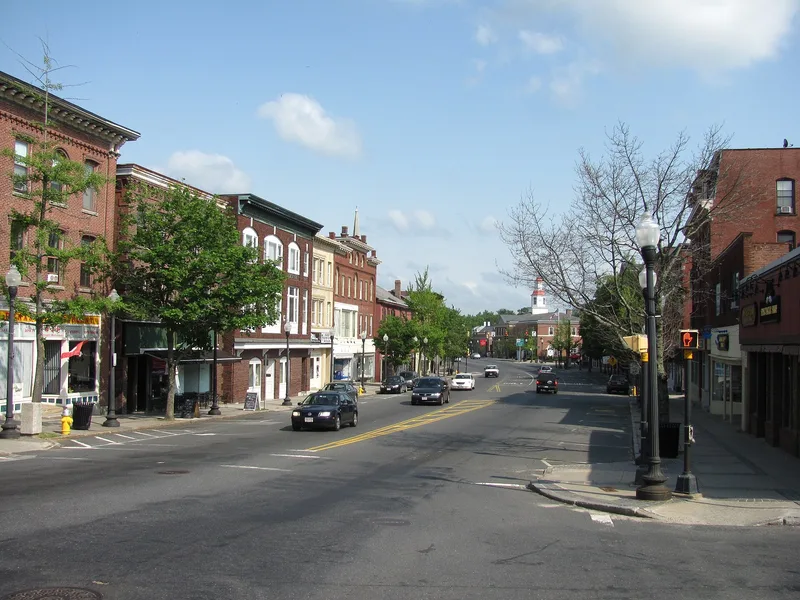
Main Street in downtown Southbridge, Massachusetts, holds a district of thirty-one buildings, a small park and the oldest section of the town cemetery, spread over roughly four-tenths of a mile. Wood frame houses of former town leaders stand at the southeastern end, civic and church buildings occupy the middle, and three- and four-story brick commercial blocks lie toward the northwest. Italianate and Second Empire styles dominate, with Greek Revival, late Federal and Georgian Revival examples. Southbridge grew from a mill town incorporated in 1816, expanding from 830 residents to 10,000 by 1900, which explains its urban character. The Edwards brothers, merchants, built many commercial buildings, including an 1852 department store. Ebenezer and Holmes Ammidown, a mill organizer and a hotel proprietor, shaped the district as well. Daniel Burnham of Chicago designed the bank and library in the Georgian Revival style. Few intrusions or alterations mar the district, which was listed as the center of the town's commercial and political life.
Machine-generated summary. This summary was generated by a language model from the official nomination document and has not been reviewed line by line by an editor. It may contain errors. Check the source document before relying on any detail. Source: nomination document (PDF) · catalog entry. Generated October 2026 (model claude-sonnet-5-5, prompt v1.0-2026-10-29).
| Period of significance | 1800-1899 |
|---|---|
| Styles | Italianate and Second Empire predominate; also Greek Revival, late Federal and Georgian Revival |
| Areas of significance | Architecture |
| Acreage | 254 |
| Boundary source | NPS cultural-resource GIS polygon |
| Full listing page | Centre Village Historic District (property record) |
What listing means for this property
This is a historic district. Buildings within its boundary are either contributing (they add to the district's significance) or non-contributing. Owners of contributing income-producing buildings can claim the 20% federal rehabilitation tax credit; homeowners should look at state credits. National Register districts impose no design review by themselves; a local historic district ordinance, if one exists, does (the difference explained).
General information, not legal or tax advice. Rules change; confirm with your State Historic Preservation Office or a qualified adviser.