Central Woolen Mills District

Why it's listed
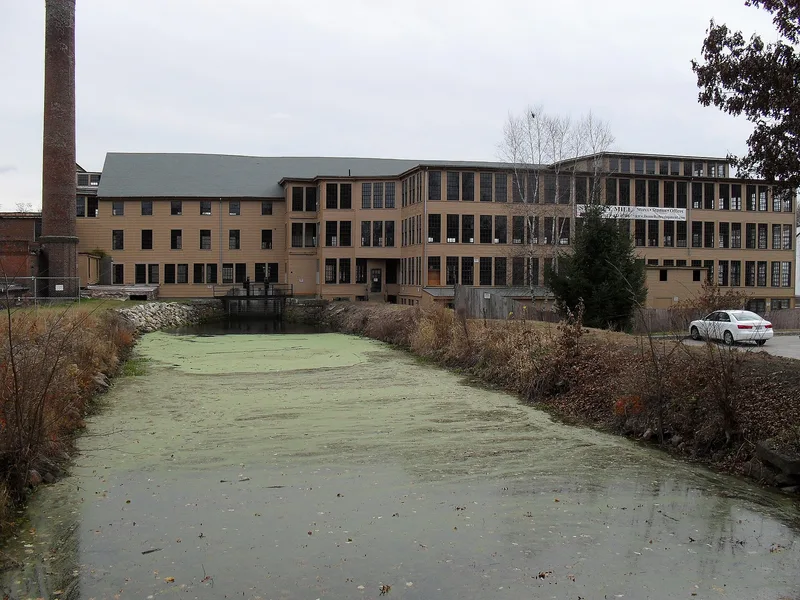
Central Woolen Mills is a four-acre industrial complex on Mendon and Cross Streets in Uxbridge, built over nearly seventy-five years. Moses Taft built the first mill in 1852 after fire destroyed his Rhode Island mill. Its power came from the abandoned Blackstone Canal, whose bed Taft bought and diverted beneath the main building. The tail race then fed Hecla Pond for reuse downstream. The site holds a four-storey wood-frame main building, brick storehouses, a picker and boiler house, an assorting building, a dye house, a machine shop and an Italianate office, with additions through the 1920s and later. During the Civil War the mill's cloth went to the U.S. government. Later operators included the Calumet Woolen Company and, from 1905, the Stanley Woolen Company, which made khakis and overcoatings in World War I. The complex was listed for its architecture, its link to Taft and its canal-powered mill history.
Machine-generated summary. This summary was generated by a language model from the official nomination document and has not been reviewed line by line by an editor. It may contain errors. Check the source document before relying on any detail. Source: nomination document (PDF) · catalog entry. Generated October 2026 (model claude-sonnet-5-5, prompt v1.0-2026-10-29).
| Period of significance | 1852-1925 |
|---|---|
| Styles | Mill complex; the office building is Italianate in design |
| Areas of significance | Industry, Engineering, Architecture |
| Acreage | 4 |
| Boundary source | NPS cultural-resource GIS polygon |
| Full listing page | Central Woolen Mills District (property record) |
What listing means for this property
This is a historic district. Buildings within its boundary are either contributing (they add to the district's significance) or non-contributing. Owners of contributing income-producing buildings can claim the 20% federal rehabilitation tax credit; homeowners should look at state credits. National Register districts impose no design review by themselves; a local historic district ordinance, if one exists, does (the difference explained).
General information, not legal or tax advice. Rules change; confirm with your State Historic Preservation Office or a qualified adviser.