Central Square Historic District

Why it's listed
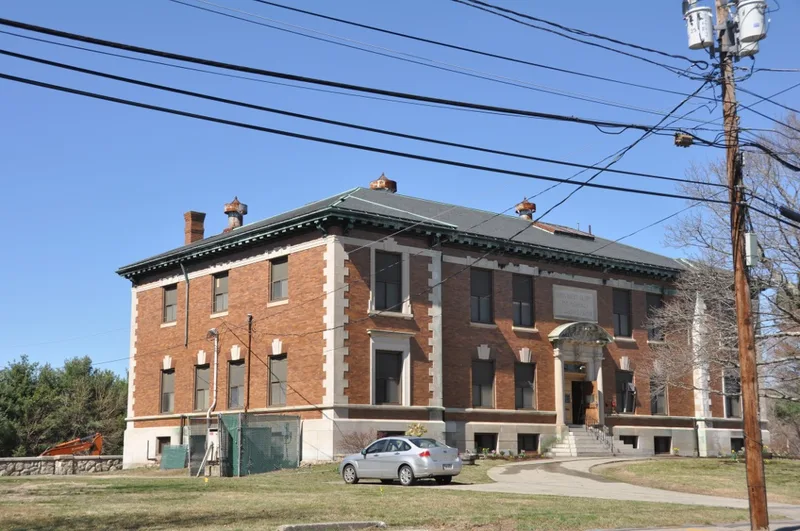
Central Square, in the east-central part of Weymouth, Massachusetts, is a neighborhood of about 35 acres built around the crossing of Broad and Middle Streets. The district holds 55 principal buildings and 28 outbuildings, mostly wood-frame houses from about 1830 to 1890. Most are vernacular or Greek Revival, with Italianate, Second Empire and Queen Anne examples among them. Local carpenters and housewrights built many of the homes. The area grew with Weymouth's cottage shoe industry, and many early residents worked as shoe manufacturers, cutters, finishers or stitchers. Small shoe shops called ten footers were attached to or stood behind houses. Residential building slowed after the 1870s, as development shifted toward nearby Jackson Square. Early twentieth century additions include the Davis Bates Clapp Memorial Building, the Masonic Temple and Fire Station 2, all in Classical Revival or Beaux-Arts style. The Jefferson School, built in 1889, was listed separately in 1981. The district retains its historic character, with few additions and limited synthetic siding.
Machine-generated summary. This summary was generated by a language model from the official nomination document and has not been reviewed line by line by an editor. It may contain errors. Check the source document before relying on any detail. Source: nomination document (PDF) · catalog entry. Generated October 2026 (model claude-sonnet-5-5, prompt v1.0-2026-10-29).
| Period of significance | 1830-1940 |
|---|---|
| Styles | No style; Federal; Greek Revival; Italianate; Second Empire; Queen Anne; Beaux-Arts |
| Areas of significance | Community Planning and Development, Architecture |
| Acreage | 35 |
| Boundary source | NPS cultural-resource GIS polygon |
| Full listing page | Central Square Historic District (property record) |
What listing means for this property
This is a historic district. Buildings within its boundary are either contributing (they add to the district's significance) or non-contributing. Owners of contributing income-producing buildings can claim the 20% federal rehabilitation tax credit; homeowners should look at state credits. National Register districts impose no design review by themselves; a local historic district ordinance, if one exists, does (the difference explained).
General information, not legal or tax advice. Rules change; confirm with your State Historic Preservation Office or a qualified adviser.