Central Mills Historic District

Why it's listed
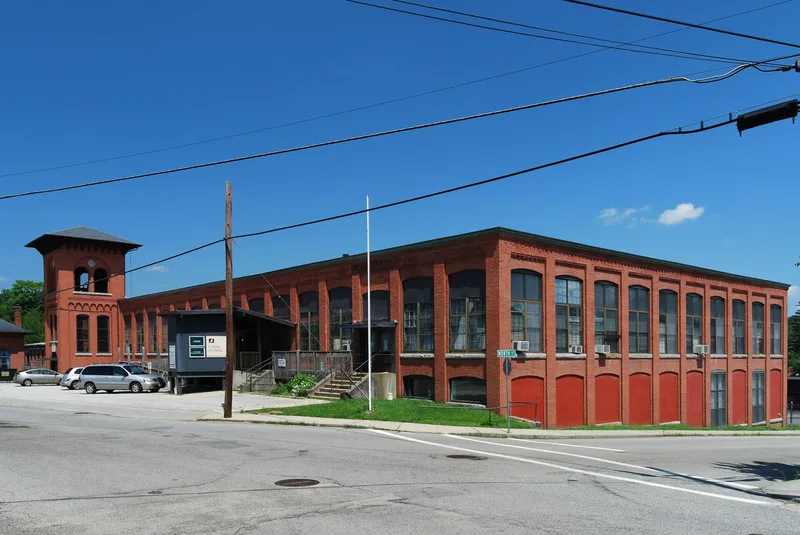
Central Mills is a brick factory complex at the edge of Southbridge's central business district, along North, Foster and Central Streets. The main block, rebuilt in 1908 in a low Romanesque Industrial style, has a two-story facade tower with Roman arches and arched brick corbelling. A small one-story office in matching style sits in front, a rebuilt section from 1837 is attached at the rear, and a ca. 1915 brick storehouse stands across North Street. The site was a water privilege where Moses Marcy built the town's first sawmill in 1732. The Central Manufacturing Company, formed in 1837, built the first mill here. The 1908 rebuilding gave it 400 looms and electric power, producing 6,500,000 yards of cotton sheeting a year. It remained an important local employer well into the 20th century. The district was listed for its association with the town's industrial economy and as a strong example of large brick factory architecture, and it retains its setting, materials and design.
Machine-generated summary. This summary was generated by a language model from the official nomination document and has not been reviewed line by line by an editor. It may contain errors. Check the source document before relying on any detail. Source: nomination document (PDF) · catalog entry. Generated October 2026 (model claude-sonnet-5-5, prompt v1.0-2026-10-29).
| Period of significance | 1837-ca. 1915 |
|---|---|
| Styles | Romanesque Industrial |
| Areas of significance | Industry, Architecture |
| Acreage | 1.2 |
| Boundary source | NPS cultural-resource GIS polygon |
| Full listing page | Central Mills Historic District (property record) |
What listing means for this property
This is a historic district. Buildings within its boundary are either contributing (they add to the district's significance) or non-contributing. Owners of contributing income-producing buildings can claim the 20% federal rehabilitation tax credit; homeowners should look at state credits. National Register districts impose no design review by themselves; a local historic district ordinance, if one exists, does (the difference explained).
General information, not legal or tax advice. Rules change; confirm with your State Historic Preservation Office or a qualified adviser.